
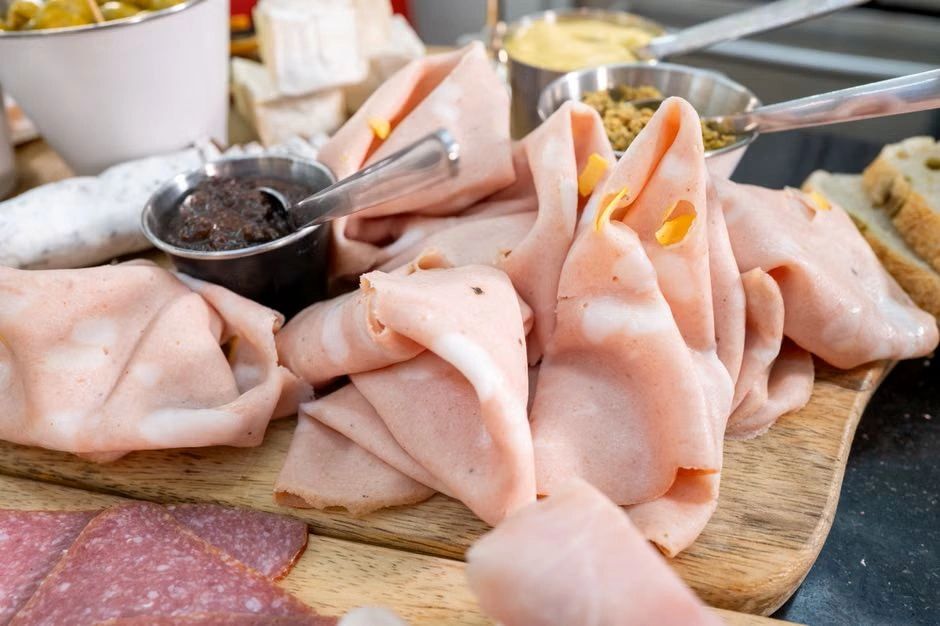
What Is Cured Deli Meat? A Quick Guide to Cold Cuts
Cured deli meat is any meat that has been preserved using salt, sugar, nitrates, or a combination of these ingredients to extend its shelf life and develop its flavor.
Here’s a quick overview of what you need to know:
- What it is: Meat preserved through salting, smoking, fermenting, or drying
- Common types: Salami, prosciutto, pepperoni, pancetta, pastrami, mortadella
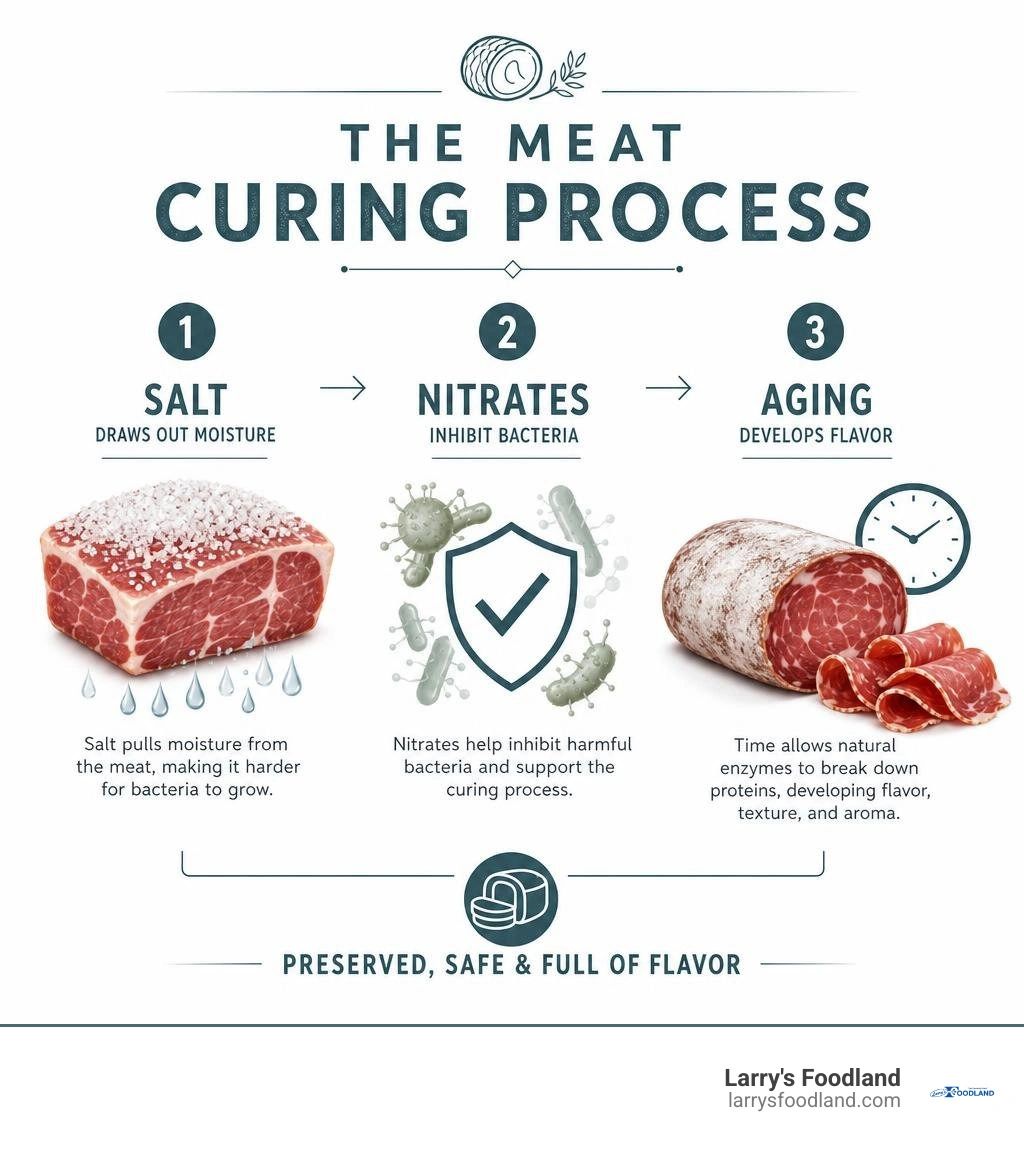
- How it works: Salt draws moisture out of the meat, making it harder for bacteria to grow
- Shelf life: Several months unopened; 7–14 days refrigerated after opening
- Key difference from uncured: Uncured meats use natural sources of nitrates (like celery powder) instead of synthetic ones — but they still go through a curing process
Whether you’re building a charcuterie board, packing a sandwich, or just stocking your fridge, understanding what’s behind the deli counter makes a real difference.
Curing is one of the oldest food preservation methods in the world. Long before refrigerators existed, people used salt and smoke to keep meat safe for months at a time. Today, that same tradition lives on in everything from thin-sliced prosciutto to bold, spiced salami.
This guide covers everything you need to know — from how the curing process actually works, to the health considerations worth knowing about, to how to store and serve these meats at their best.
What is Cured Deli Meat and How Does Curing Work?
When we walk up to a deli counter, we are looking at thousands of years of human culinary ingenuity. At its core, cured deli meat is meat that has undergone a specialized preservation process designed to prevent spoilage and elevate flavor. But how exactly does this magic happen?
To understand curing, we have to look at the microscopic level. The primary threat to fresh meat is microbial growth—specifically bacteria, mold, and yeast that thrive in moist, nutrient-rich environments. The fundamental goal of Curing (food preservation) is to eliminate this moisture, making the meat an incredibly hostile environment for these unwanted microscopic guests.
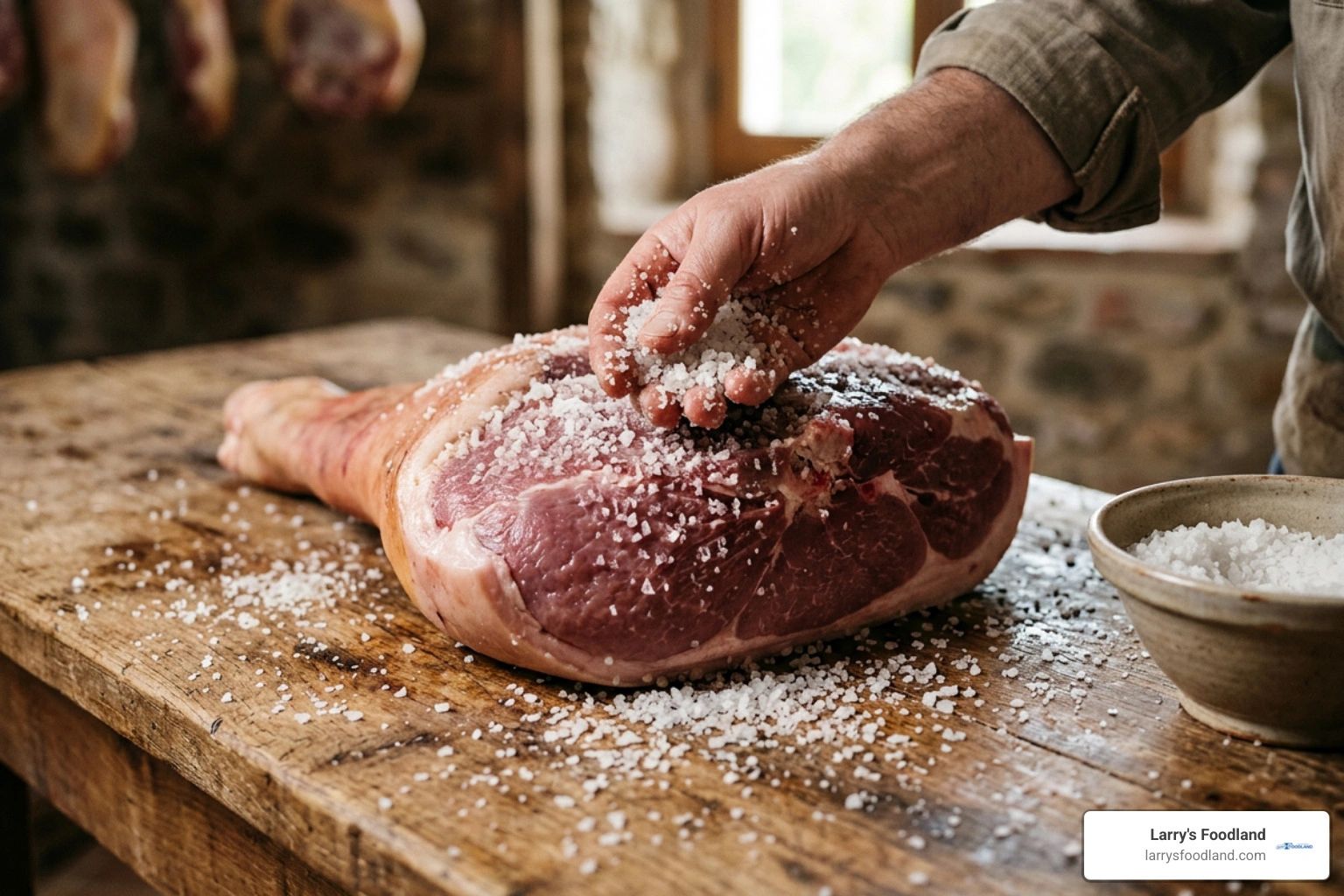
The primary driver of this process is osmosis. When we apply salt to raw meat, it creates a highly concentrated environment on the exterior. To balance this concentration, water molecules inside the meat’s cells are drawn outward. As moisture is steadily removed, the water activity ($a_w$) of the meat drops.
Historically, this was the ultimate survival hack. Ancient civilizations, from the Romans exporting salt pork to feed their massive armies to Indigenous populations smoking meat at the top of their tipis, relied on curing to survive seasons of scarcity. By drawing out the water, they extended the shelf life of their proteins from a few days to several months.
Today, while we have the luxury of modern refrigeration, we still cure meat because the process does something spectacular to the flavor and texture. As water evaporates, the natural flavors of the beef, pork, or poultry become highly concentrated. Concurrently, beneficial biochemical changes occur: enzymes break down complex proteins into savory amino acids (like glutamate, which gives us that deep umami sensation), and fats oxidize into complex, aromatic compounds.
The Science of the Curing Process
To appreciate the craft of the modern charcutier, we have to dig slightly deeper into the science. Curing is not just about dumping a bucket of table salt onto a pork shoulder. It is a carefully calibrated chemical dance involving salt, sugar, nitrates, nitrites, and sometimes smoke.
According to technical standards like the HP-FS-9047 Processing Guidelines for Ready to Eat Meat , maintaining precise chemical thresholds is critical for both food safety and quality. Let’s break down the roles of these key ingredients:
- Salt (Sodium Chloride): The undisputed king of curing. Salt dehydrates the meat, alters cellular structure to inhibit foodborne pathogens, and extracts myofibrillar proteins, which help bind ground meat products (like sausages) together.
- Sugar: Often added to balance the harshness of the salt. Sugar also serves as a food source for beneficial lactic acid bacteria during fermentation, which lowers the pH of the meat, further protecting it from pathogens.
- Nitrates and Nitrites: These are the heavy hitters of chemical preservation. Sodium nitrite ($NaNO2$) and sodium nitrate ($NaNO3$) perform several essential functions:
- They strongly inhibit the growth of Clostridium botulinum, the deadly bacterium responsible for botulism.
- They react with myoglobin in the meat to produce nitric oxide, which locks in that characteristic, vibrant pinkish-red color we expect in ham and salami. Without nitrites, cured beef or pork would turn an unappealing gray.
- They act as powerful antioxidants, preventing lipid oxidation (which causes fat to go rancid) and contributing to the classic “cured” flavor profile.
In commercial production, because pure nitrites are lethal in high doses (the human lethal dose is roughly 22 mg/kg of body weight), they are carefully diluted. Modern processors use specialized curing salts (often dyed pink to prevent them from being confused with regular table salt) and strictly limit nitrite concentrations to a maximum of 200 parts per million (ppm) in general cured products, and down to 120 ppm in bacon to prevent the formation of harmful nitrosamines during high-heat cooking.
Main Types of Cured Deli Meats and Their Characteristics
The deli case is incredibly diverse, boasting a massive array of textures, colors, and flavor profiles. While the raw materials are usually simple—primarily pork, beef, or poultry—the way those meats are handled yields wildly different results.
Dry-Cured vs. Wet-Cured Deli Meats
To navigate the deli counter like a pro, it helps to divide cured meats into two primary processing styles: dry-cured and wet-cured.
Wet-Curing (Brining)
This is the most common commercial method for everyday lunch meats. In wet-curing, the meat is submerged in or injected with a liquid brine solution containing water, salt, sugar, nitrites, and various seasonings. Injection curing is incredibly efficient; it distributes the preservative solution rapidly throughout the muscle tissue, ensuring consistent curing in a matter of hours or days.
Wet-cured meats retain a high moisture content, resulting in a plump, tender, and juicy texture. Standard deli hams, corned beef, and pastrami are prime examples of wet-curing.
Dry-Curing
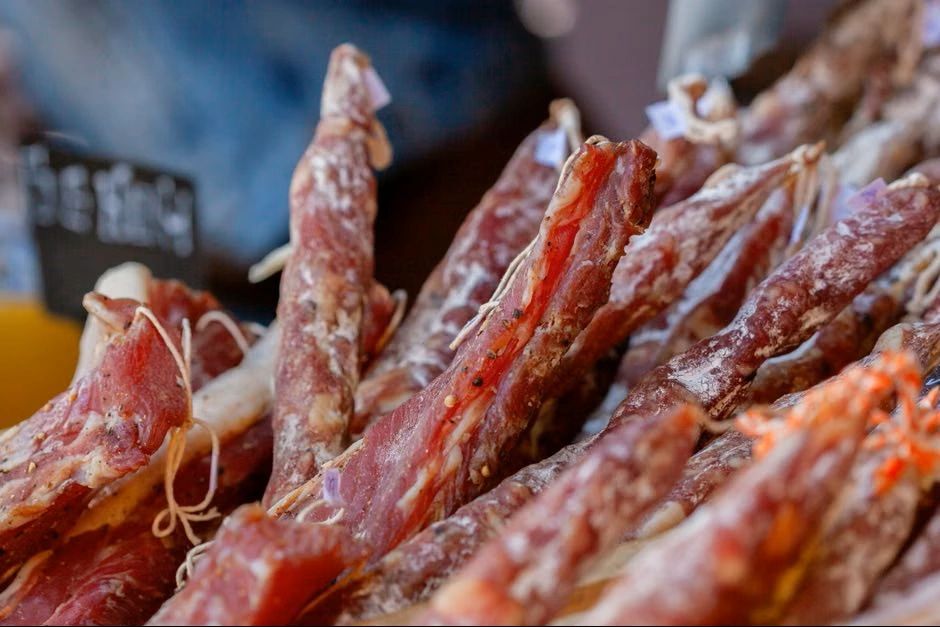
This is the patient, artisanal route. Instead of using liquid, dry-curing involves rubbing the exterior of the meat with a dry mixture of salt, sugar, and spices. The meat is then left to cure in temperature- and humidity-controlled rooms for weeks, months, or even years. During this time, the meat slowly dehydrates, losing up to 30% or more of its original weight.
The result is a dense, firm texture and an incredibly concentrated, complex flavor. Because of the extensive water loss, many dry-cured meats are shelf-stable and do not strictly require cooking before consumption. A classic example of this style is a premium, dry-air aged ham like Prosciutto Deli Ready – Citterio S.p.A. , which is meticulously aged to develop its signature melt-in-your-mouth texture and delicate, sweet-savory profile.
Popular Varieties of Cured Deli Meat
Let’s look at some of the most popular cured meats you’ll encounter at our deli counter:
- Genoa Salami: Originating from the Genoa region of Italy, this is a dry-cured, fermented sausage made primarily of coarsely ground pork, marbled fat, garlic, and white wine. It has a mild, tangy, and savory flavor with a softer, moister texture than harder salamis.
- Capocollo (Coppa): Made from the prized pork collar muscle, this dry-cured whole-muscle cut is seasoned with red wine, garlic, and spices like paprika or fennel. It features beautiful marbling, offering a rich, buttery texture.
- Pancetta: Often referred to as Italian bacon, pancetta is pork belly that has been cured with salt, pepper, and spices, then rolled into a tight cylinder and dry-aged. Unlike American bacon, it is typically not smoked, highlighting its pure, seasoned pork flavor.
- Mortadella: A pride of Bologna, Italy, mortadella is an emulsified pork sausage. The meat is ground into a smooth paste, studded with cubes of pork neck fat, black pepper, and often pistachios, then gently slow-cooked. It is incredibly silky, delicate, and aromatic.
- Smoked Salami: For those who love a deeper, rustic profile, options like Smoked Beef Salami, Presliced – Brooklyn Cured combine the complexity of fermentation with natural hardwood smoke and warm deli spices, offering a robust, savory bite that stands up beautifully in sandwiches.
Cured vs. Uncured Deli Meats: What is the Difference?
One of the most common sources of confusion at the grocery store is the “uncured” label. You might see a package of “uncured ham” sitting right next to a standard ham and wonder: If it’s uncured, does that mean it’s just raw, fresh pork?
The short answer is no. “Uncured” deli meat is still cured; it just uses natural, plant-derived sources of preservatives instead of synthetic chemical additives.
To clarify this distinction, let’s look at how they compare side-by-side:
Feature Cured Deli Meat “Uncured” Deli Meat Preservative Source Synthetic sodium nitrite or sodium nitrate Natural nitrates from celery powder, swiss chard powder, or sea salt Chemical Action Direct application of synthetic nitrites Soil bacteria or natural enzymes convert plant nitrates into active nitrites Color and Flavor Bright pink color; distinct savory, cured flavor Virtually identical pink color and savory flavor profile Sodium Levels Typically high Often comparable to standard cured meats USDA Labeling Labeled as “Cured” Must be labeled as “Uncured” with a disclaimer like “No Nitrates or Nitrites Added*”
Understanding “Uncured” Cured Deli Meat Labels
The “uncured” labeling requirement is a quirk of USDA food safety regulations. Under federal law, if a manufacturer does not use synthetic sodium nitrite or nitrate, they must label the product as “uncured.” However, to ensure the product remains safe and shelf-stable, they cure the meat using vegetable powders that are naturally incredibly rich in nitrates—most commonly celery juice powder or swiss chard powder.
When these natural plant powders are mixed with the meat, natural bacterial cultures or enzymes convert the plant-based nitrates into nitrites. Chemically speaking, the resulting nitrite molecule is identical to the synthetic version.
For example, a premium product like uncured Genoa salami slices uses swiss chard powder to achieve its preservation, beautiful color, and traditional tangy flavor without any synthetic additives. Similarly, family favorites like Deli Fresh Smoked Uncured Ham | Oscar Mayer offer that classic, smoky lunchbox ham flavor using natural celery juice or cultured celery juice instead of chemical preservatives.
So, when choosing between cured and uncured, both undergo a curing process to keep them safe and delicious. The choice comes down to whether you prefer synthetic preservatives or plant-derived, natural alternatives.
Health Considerations and Food Safety Guidelines
While cured deli meat is undeniable in its culinary appeal, it is important to approach it with a balanced perspective regarding health and food safety.
Because curing relies heavily on salt, cured meats are notoriously high in sodium. A high-sodium diet can contribute to elevated blood pressure, which is a major risk factor for cardiovascular disease.
Furthermore, extensive epidemiological research has raised flags about processed meat consumption. A massive prospective study following 448,568 people across Europe demonstrated a positive association between processed meat consumption and mortality caused by cardiovascular disease and cancer. Similarly, a prospective study in the United States following over half a million people flagged a comparable association between death and increased processed meat consumption.
Because of these findings, major health organizations, including the World Cancer Research Fund International, recommend limiting or avoiding processed meats to reduce the risk of colorectal cancer. This risk is thought to be tied to the formation of carcinogenic compounds called nitrosamines, which can form when nitrites react with amino acids in the stomach or under high-heat cooking conditions (like frying bacon).
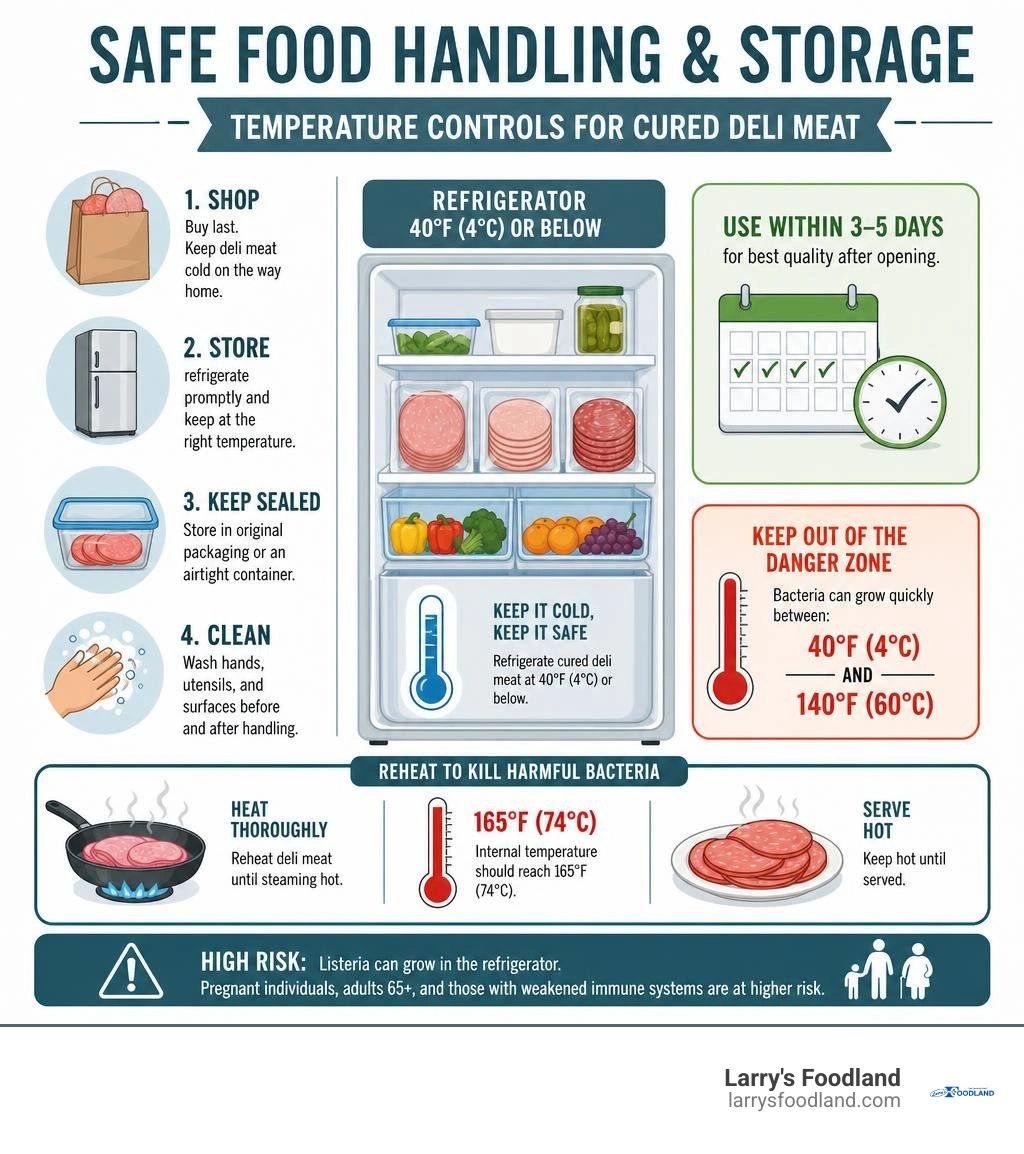
Listeria Prevention and Reheating Recommendations
Beyond long-term nutritional considerations, there are immediate food safety guidelines to keep in mind, particularly regarding Listeria monocytogenes.
Unlike most foodborne pathogens, Listeria is a hardy bacterium that can survive and even multiply in cold refrigerator temperatures. While healthy adults rarely fall seriously ill from Listeria, it poses a severe threat to vulnerable populations—specifically pregnant individuals, adults aged 65 or older, and anyone with a weakened immune system.
Following a significant outbreak, the CDC issued clear safety advice: people in these high-risk categories should reheat all deli products to an internal temperature of 165 °F (74 °C) or until “steaming hot” before eating, even when there is no active, ongoing outbreak. Once reheated, these meats should be consumed within four days.
Another factor to consider is how your meat is sliced. Most pre-sliced, packaged lunch meats are formulated with stronger preservatives than those sliced to order. This is because pre-slicing creates a much larger exposed surface area, increasing the risk of bacterial contamination and oxidation. Getting your meats sliced fresh to order at our service counter is a fantastic way to minimize your exposure to heavy preservatives while enjoying a superior, fresher flavor.
Best Practices for Storing, Serving, and Culinary Uses
To get the absolute most out of your cured meats, proper handling is key. Whether you are crafting a simple weekday sandwich or assembling a show-stopping charcuterie board, these professional tips will elevate your experience.
Storage Guidelines
- Refrigeration: Always keep your deli meats tightly wrapped. Once a package is opened, fresh deli-sliced meats should ideally be consumed within 7 days, while dry-cured presliced charcuterie is typically best enjoyed within 10 days.
- Salami Chubs: Unopened dry-cured salami chubs can actually be stored in a cool, dry pantry for up to six weeks, or indefinitely in the refrigerator. Once you cut into them, wrap them tightly in parchment paper or plastic wrap and store them in the fridge for up to 14 days.
Serving Temperatures
Never serve premium dry-cured meats straight from the fridge! Cold temperatures mask the delicate fats and complex aromas. For meats like prosciutto, coppa, and dry salami, lay the slices out on your serving platter and let them sit at room temperature for 15 to 20 minutes before serving. You will watch the fats turn translucent and shiny, indicating they are ready to melt beautifully on your tongue.
Culinary Pairings and Board Assembly
When building a charcuterie board, aim for a balance of textures and flavors:
- The Meats: Combine a delicate, silky option (like prosciutto) with a firm, chewy option (like a dry-cured Genoa salami) and a rich, spreadable or soft option (like mortadella).
- The Cheeses: Pair mild, creamy cheeses (like fresh mozzarella or goat cheese) with salty, aged meats, and sharp, hard cheeses (like Pecorino Romano or aged white cheddar) with richer, fattier meats.
- The Acid: Cured meats are rich and fatty. Cut through that richness by adding bright, acidic elements to your board—such as cornichons, pickled red onions, olives, or a grain mustard.
- The Sweet: Balance the intense saltiness with fresh figs, sliced pears, melon wedges, or a drizzle of hot honey.
Frequently Asked Questions about Cured Deli Meats
What is the difference between cured and uncured deli meat?
The difference lies entirely in the source of the preservatives. Standard cured deli meats use synthetic chemical additives like sodium nitrite to preserve the meat, enhance its pink color, and prevent bacterial growth. “Uncured” deli meats use natural, plant-derived sources of nitrates—most commonly celery juice powder or swiss chard powder—to achieve the exact same preservation effects. Chemically, both products undergo a curing process.
How long does cured deli meat last in the refrigerator?
Unopened, vacuum-sealed packages of wet-cured lunch meat can last until their printed sell-by date. Once opened, wet-cured deli meats should be consumed within 7 days. Dry-cured presliced meats (like prosciutto) can last up to 10 days after opening if kept tightly wrapped. Always trust your senses: if the meat smells sour, looks dull or grayish, or has developed a slimy texture, it is time to discard it.
Can you freeze cured deli meat?
Yes, you can freeze cured deli meats! Wet-cured lunch meats and fully cooked sausages freeze incredibly well for up to three months. To freeze, wrap the meat tightly in plastic wrap, then place it in a heavy-duty freezer bag to prevent freezer burn. Defrost overnight in the refrigerator. You should avoid freezing delicate, presliced dry-cured charcuterie (like prosciutto) or whole salami chubs, as the freezing and thawing process can negatively alter their delicate textures.
Conclusion
From the rich, garlic-infused notes of a classic Genoa salami to the delicate, buttery melt of a perfectly aged prosciutto, cured deli meat represents a beautiful marriage of ancient preservation science and culinary art. Understanding how these meats are made, how to read labels, and how to handle them safely ensures you can enjoy them to their absolute fullest.
At Larry’s Foodland, we take pride in offering our community top-tier convenience and exceptional quality. As your go-to 24-hour supermarket in Livonia, Michigan, we are always open to serve you. Whether you need a midnight snack or are prepping for a Sunday afternoon football party, our full-service Deli department is stocked and ready.
Stop by our counter at 33151 Plymouth Rd to explore our incredible selection of premium cold cuts, or let our expert butchers custom-slice your favorite cured meats to your exact specifications.
Ready to build the ultimate sandwich or charcuterie board? Skip the line and order your favorite deli specialties online today!
Explore Our Fresh Deli Selection at Larry’s Foodland