The Quiet Disappearance of the 24-Hour Convenience Store
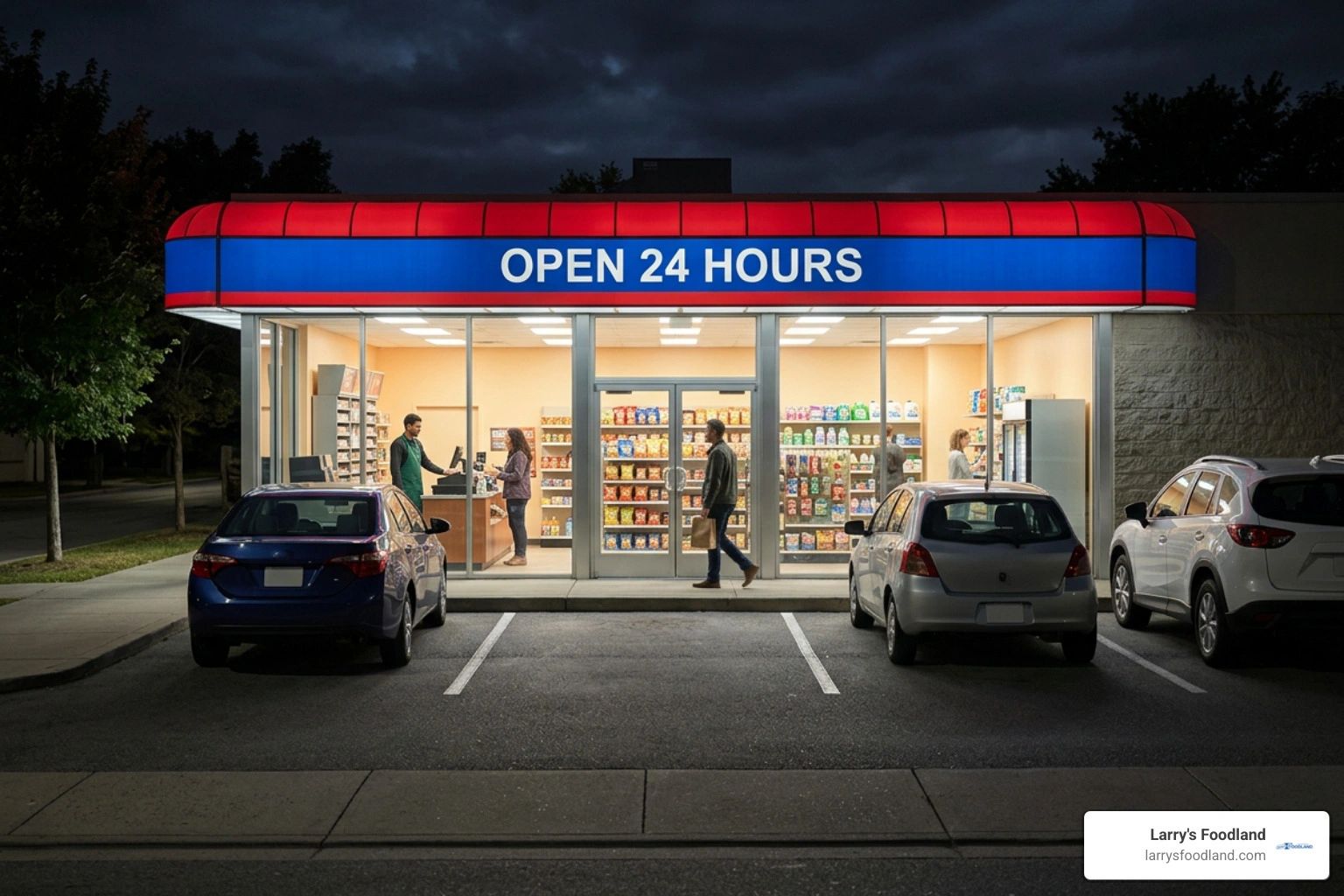
If you’ve gone looking for a 24 hour convenience store lately and found a dark storefront instead, you’re not alone.
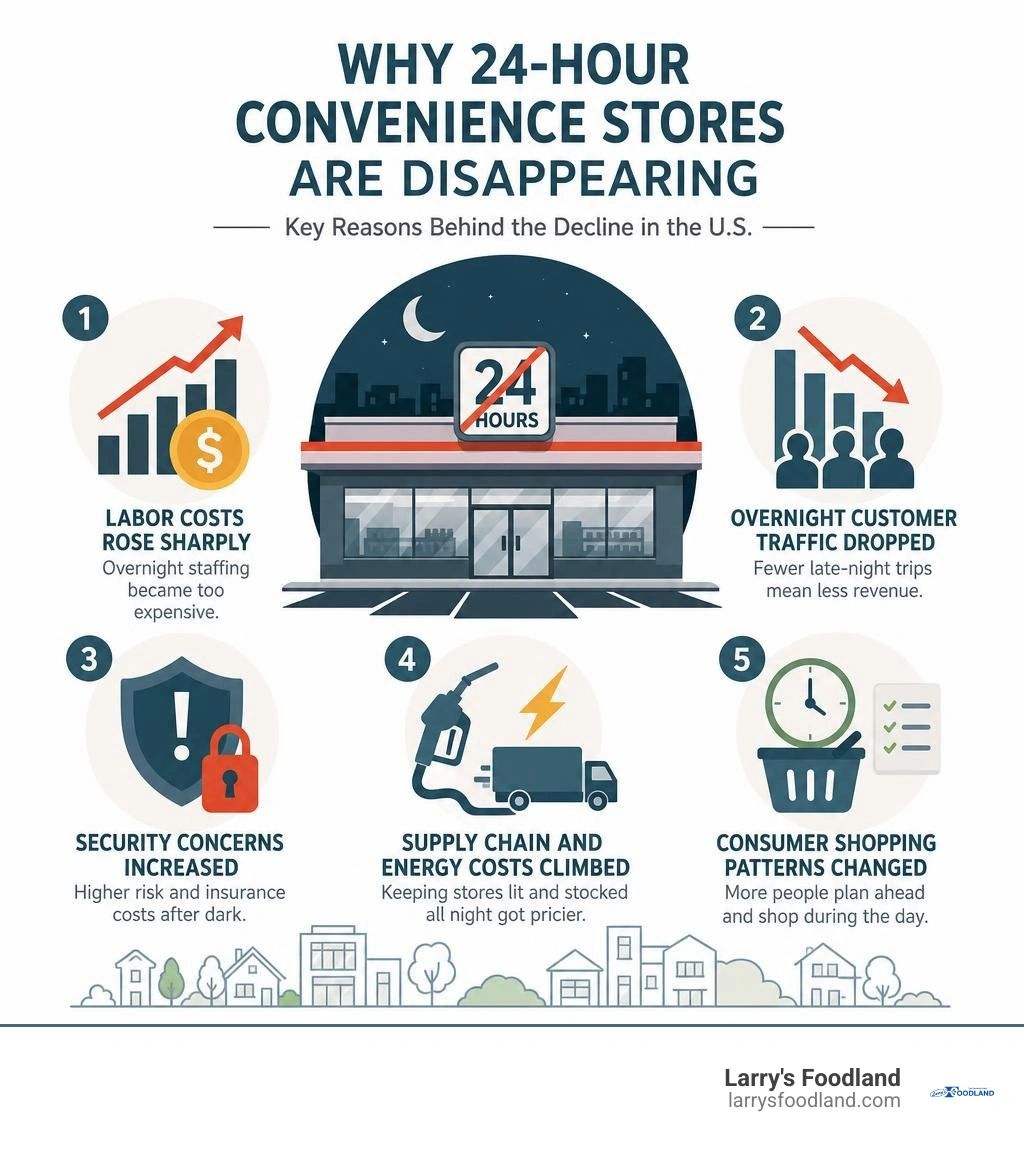
Quick answer: Why are fewer stores open 24/7?
- Labor costs rose sharply — overnight staffing became too expensive for many retailers
- Overnight customer traffic dropped — especially after pandemic-era habit shifts
- Security concerns increased — late-night hours brought higher risk and insurance costs
- Supply chain and energy costs climbed — keeping a store lit and stocked all night got pricier
- Consumer shopping patterns changed — more people plan ahead and shop during the day
There was a time when the glow of a convenience store sign at 2 a.m. felt like a promise. Someone’s always there. You’re never stuck.
That promise has quietly faded for millions of Americans.
Across the country — in suburbs, small towns, and even major cities — stores that once ran around the clock have cut their overnight hours. The shift happened gradually, then all at once. Many shoppers only noticed when they needed something late at night and found a locked door.
With approximately 152,000 convenience stores operating across the U.S., the industry still moves over $246 billion in annual sales. But the 24-hour model that once defined it is under serious pressure. And the people who feel it most are the ones who needed those late-night hours — night shift workers, parents up with a sick child, anyone without the luxury of a flexible schedule.
This piece breaks down why it happened, who it hurts, and what it means for your community.
The Death of the 24 Hour Convenience Store
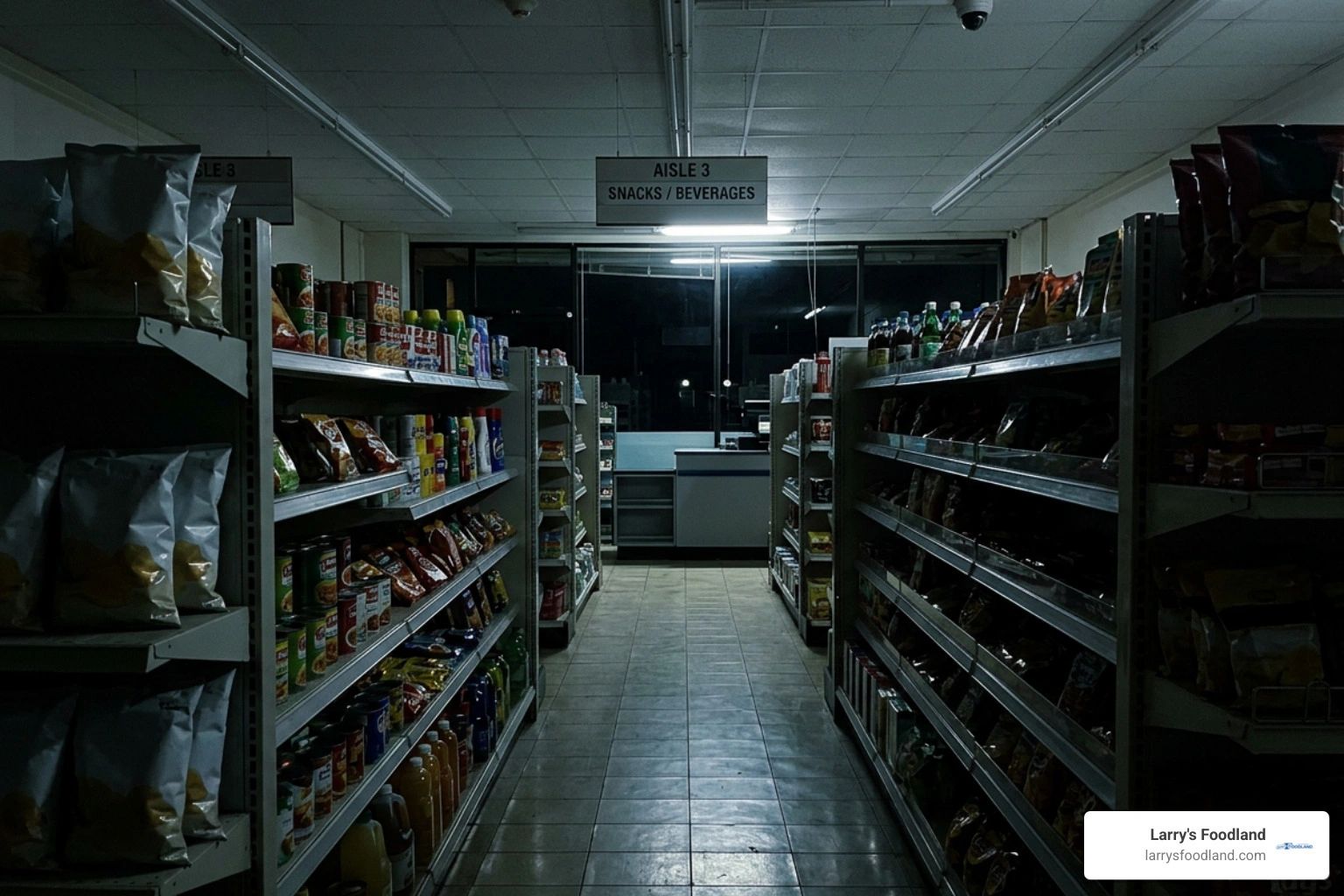
The landscape of late-night retail has shifted dramatically over the last few years. If you drive through Metro Detroit or look at the disappearance of late-night shopping options across Michigan, you will notice a stark contrast to how things used to be. The traditional midnight run for a gallon of milk, a quick snack, or emergency medicine has become a logistical challenge.
For decades, the 24 hour convenience store was a reliable neighborhood anchor. National brands and regional favorites established their reputations on being available whenever duty—or a late-night craving—called. However, the legacy of the COVID-19 pandemic accelerated a retail shift that was already brewing under the surface.
When the pandemic hit, temporary hours were introduced to allow for deep cleaning and to cope with sudden supply chain disruptions. Retailers quickly realized something surprising: closing overnight didn’t hurt their bottom line as much as they expected. In fact, in many cases, it made them more profitable. By the time we reached June 2026, those “temporary” overnight closures had become permanent policy for the vast majority of major retail chains. Even massive multi-department stores permanently abandoned their 24-hour operations in favor of a midnight or 11 p.m. closing time.
This massive retail shift has forced a major adjustment in consumer habits. The convenience economy has pivoted toward delivery apps, curbside pickup, and daytime scheduling, leaving those who genuinely rely on late-night commerce with very few options.
Why Did the Lights Go Out? The Economic and Operational Reality
Operating a retail business in 2026 is vastly different from operating one a decade ago. The decision to turn off the lights at 10 p.m. or midnight isn’t born out of laziness; it is a calculated response to a challenging economic environment.
To understand why the classic 24 hour convenience store model is struggling, we have to look at the cold, hard numbers. The primary driver of this shift is the ongoing labor shortage combined with rising wages. Finding reliable staff to work the graveyard shift has always been difficult, but with rising minimum wages and a highly competitive job market, the premium required to incentivize overnight workers has skyrocketed.
Furthermore, keeping a store open during the third shift involves a delicate balance of overhead costs against a relatively small volume of sales. While more than 60% of convenience store transactions historically occurred between 6 p.m. and 6 a.m., the vast majority of those transactions are concentrated in the early evening (6 p.m. to 10 p.m.) and the early morning (5 a.m. to 6 a.m.). The dead hours of 1 a.m. to 4 a.m. simply do not generate enough revenue to offset the operational costs of staffing, heating, cooling, and lighting a massive commercial space.
To illustrate this economic reality, consider the following cost-benefit comparison of a typical retail storefront operating during the day versus the overnight hours:
Operational Cost Factor Daytime Operations (6:00 AM – 10:00 PM) Overnight Operations (10:00 PM – 6:00 AM) Average Hourly Wage Standard base rate Graveyard shift premium (typically 15-25% higher) Staffing Requirements Multiple employees (high productivity) Minimum 2 employees (often lower productivity/idle time) Utility Costs High efficiency (offset by high customer volume) High cost per customer transaction Security & Insurance Standard rates Elevated premium due to late-night risk profiles Average Transaction Value Higher (full baskets, grocery runs) Lower (single-item impulse buys, fuel-only) Shrinkage & Theft Risk Low to moderate Significantly higher percentage of total sales
Staffing and Security Challenges in the 24 Hour Convenience Store
Beyond the basic financial math, the physical safety of employees is a major concern for retail operators. The overnight shift inherently carries a higher risk profile. Security concerns, retail theft, and the safety of lone workers during the dark hours of the night have forced many business owners to re-evaluate their hours.
To keep a 24 hour convenience store running safely, businesses must invest heavily in modern security infrastructure. This includes:
- High-definition smart security cameras with active monitoring
- Bullet-resistant glass enclosures for cashiers
- Advanced drop-safes that limit the amount of cash accessible on the floor
- Silent alarm systems directly linked to local law enforcement
Even with these protocols in place, employee retention for overnight shifts remains incredibly low. Many workers simply do not want to take on the safety risks and sleep schedule disruptions associated with the third shift, leading to high turnover rates and increased training costs for business owners.
The Shift to Planned Shopping and Daytime Grocery Runs
Another major factor in the decline of 24-hour operations is the changing behavior of the modern shopper. With the rise of meal preparation culture, digital budgeting tools, and structured weekly grocery trips, the average consumer has become much more organized.
Instead of relying on late-night emergency runs to pick up missing ingredients, more families are planning their shopping lists in advance. Stocking up on home essentials during daytime hours has become the norm. While this is highly efficient for the household budget, it further dilutes the pool of late-night shoppers, making it even harder for 24-hour retailers to justify staying open through the night.
The Community Impact of Losing Round-the-Clock Retail
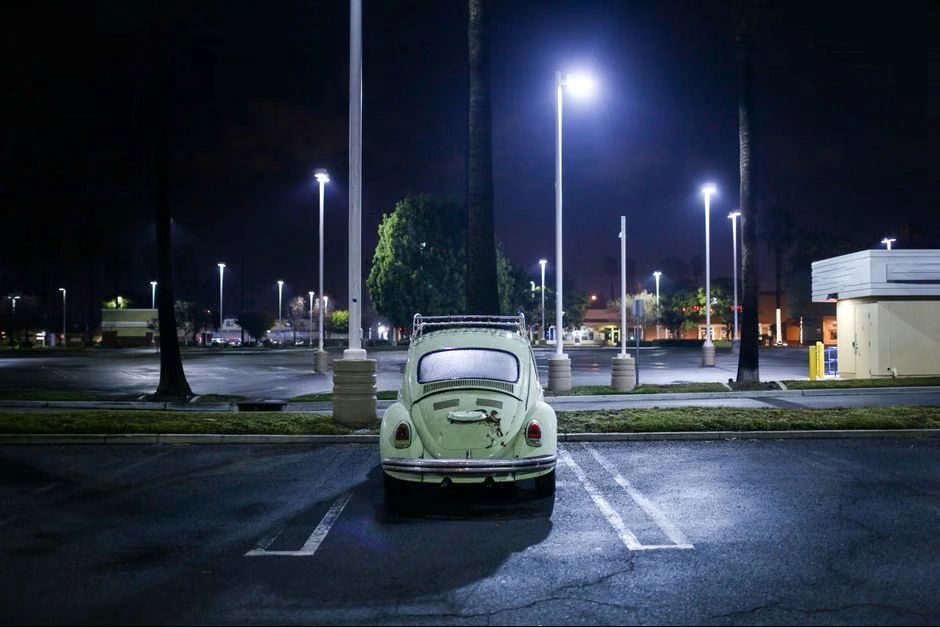
While closing overnight makes perfect sense on a corporate balance sheet, it leaves a significant void in the community. The loss of round-the-clock retail is not just an inconvenience; it is a quality-of-life issue that disproportionately affects certain segments of the population.
Consider the night shift workers. Healthcare professionals, first responders, manufacturing employees, logistics workers, and hospitality staff make up a massive portion of the Michigan workforce. When these hard-working individuals finish a shift at 3 a.m., they don’t just want a bag of chips and a energy drink—they need real, nourishing food. They need to buy groceries for their families, pick up fresh produce, or grab a quick, healthy meal before going to sleep.
When every local 24 hour convenience store and supermarket shuts its doors, these workers are left in a “food desert” of sorts, where their only late-night options are fast-food drive-thrus or highly processed vending machine snacks. Furthermore, well-lit 24-hour stores serve as informal safety havens in many neighborhoods. A bright, open store with active staff provides a safe place to pull over, use a clean restroom, or seek assistance during an emergency in the dead of night.
Finding Fresh Food in a Post-24 Hour Convenience Store World
The biggest challenge in a world without 24-hour supermarkets is finding high-quality, fresh food during off-hours. If you walk into a standard gas station convenience store at 2 a.m., your options are largely limited to:
- Processed potato chips and sugary candies
- Roller-grill hot dogs that may have been sitting for hours
- Soda, energy drinks, and sweetened teas
- Microwavable pocket sandwiches with minimal nutritional value
Finding fresh produce, high-quality dairy, or a custom-cut piece of meat is virtually impossible at that hour in most communities. This lack of access directly impacts the health and well-being of night-shift families who deserve access to the same high-quality ingredients as daytime shoppers.
Frequently Asked Questions About 24-Hour Retail
Why did most stores stop staying open 24/7?
The primary reasons are skyrocketing labor costs, difficulty finding staff willing to work the graveyard shift, and increased security concerns during overnight hours. Additionally, the pandemic proved to retailers that they could capture the majority of their sales during daytime hours while significantly cutting down on overhead, utilities, and security costs by closing overnight.
Are there any 24-hour grocery stores left?
They are becoming incredibly rare. While national chains and major supercenters have almost entirely abandoned the 24-hour model, a few dedicated regional markets and independent local supermarkets have chosen to keep their doors open 24/7 to serve their local communities.
How do stores handle overnight security now?
Stores that still operate 24 hours a day utilize sophisticated safety measures to protect their staff and customers. This includes installing smart AI-driven security cameras, keeping parking lots exceptionally well-lit, utilizing locked-door policies where customers are served through a secure window during late hours, and working closely with local law enforcement to ensure rapid response times.
Conclusion
The convenience landscape has certainly changed, but the need for round-the-clock access to high-quality food hasn’t gone away. While other stores have turned off their neon signs and locked their doors at midnight, we believe that night shift workers, busy parents, and late-night shoppers still deserve the very best.
At Larry’s Foodland, we are proud to stand as the exception to the rule. We remain a dedicated 24-hour supermarket in Livonia, MI, committed to providing our community with fresh produce, custom-cut meats, and delicious baked goods at any hour of the day or night. Our unique selling proposition is true round-the-clock convenience, featuring full-service butcher and bakery departments that don’t cut corners just because the sun went down.
Whether you need a fresh ribeye steak cut by a professional butcher at 3 a.m., a warm loaf of bread, or just your weekly groceries without the daytime crowds, our doors are always open for you.
Come visit us tonight! You can easily find our location on Mapquest to plan your next late-night run, and don’t forget to check out our weekly sales ad to find the best deals on fresh ingredients before you shop. We look forward to serving you—no matter what time your clock says!