Why Finding Fresh Organic Food Near You Matters More Than Ever
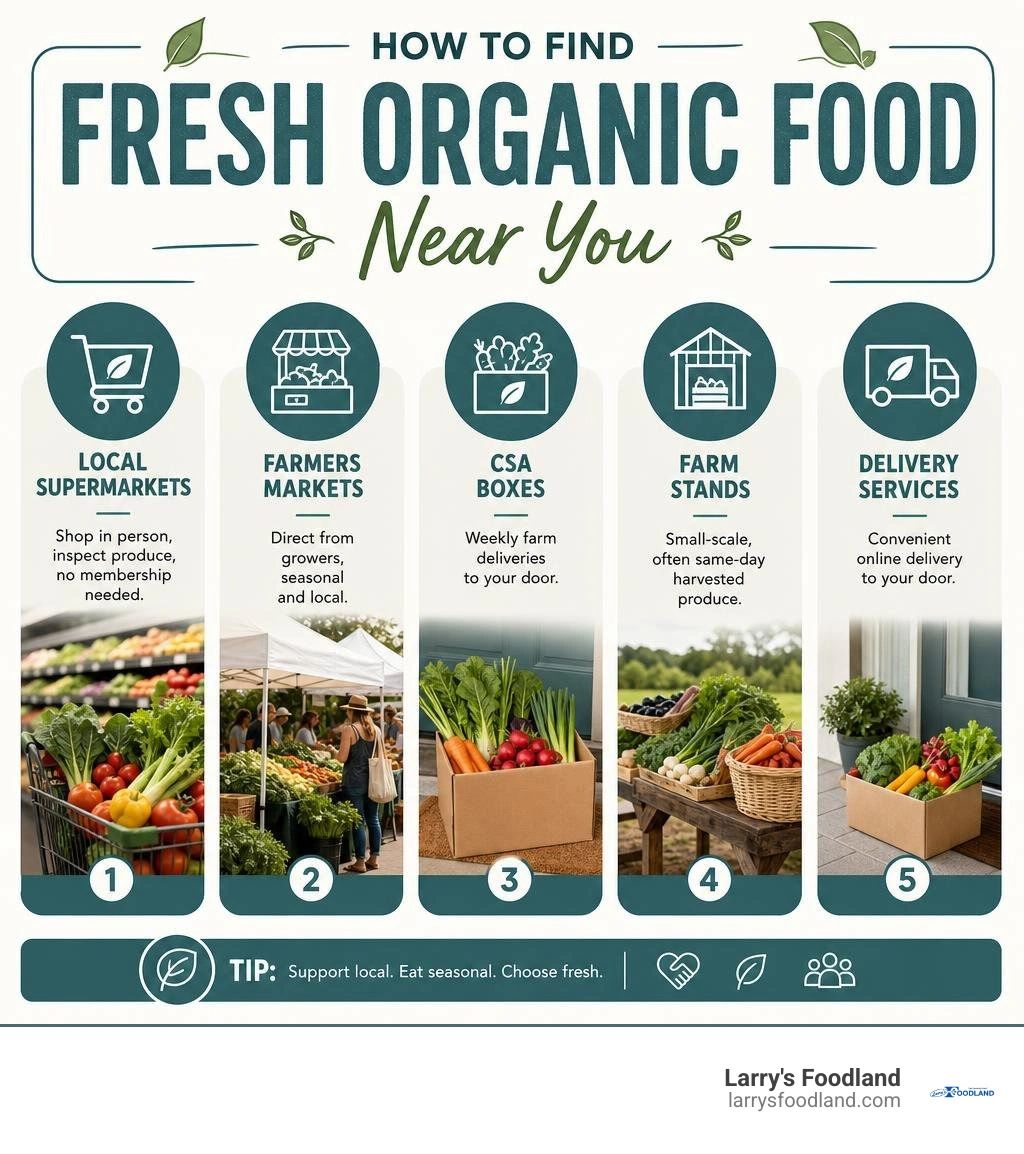
Looking for fresh organic food near me? Here are the fastest ways to find it:
- Local supermarkets (like Larry’s Foodland) — shop in person, inspect produce, no membership needed
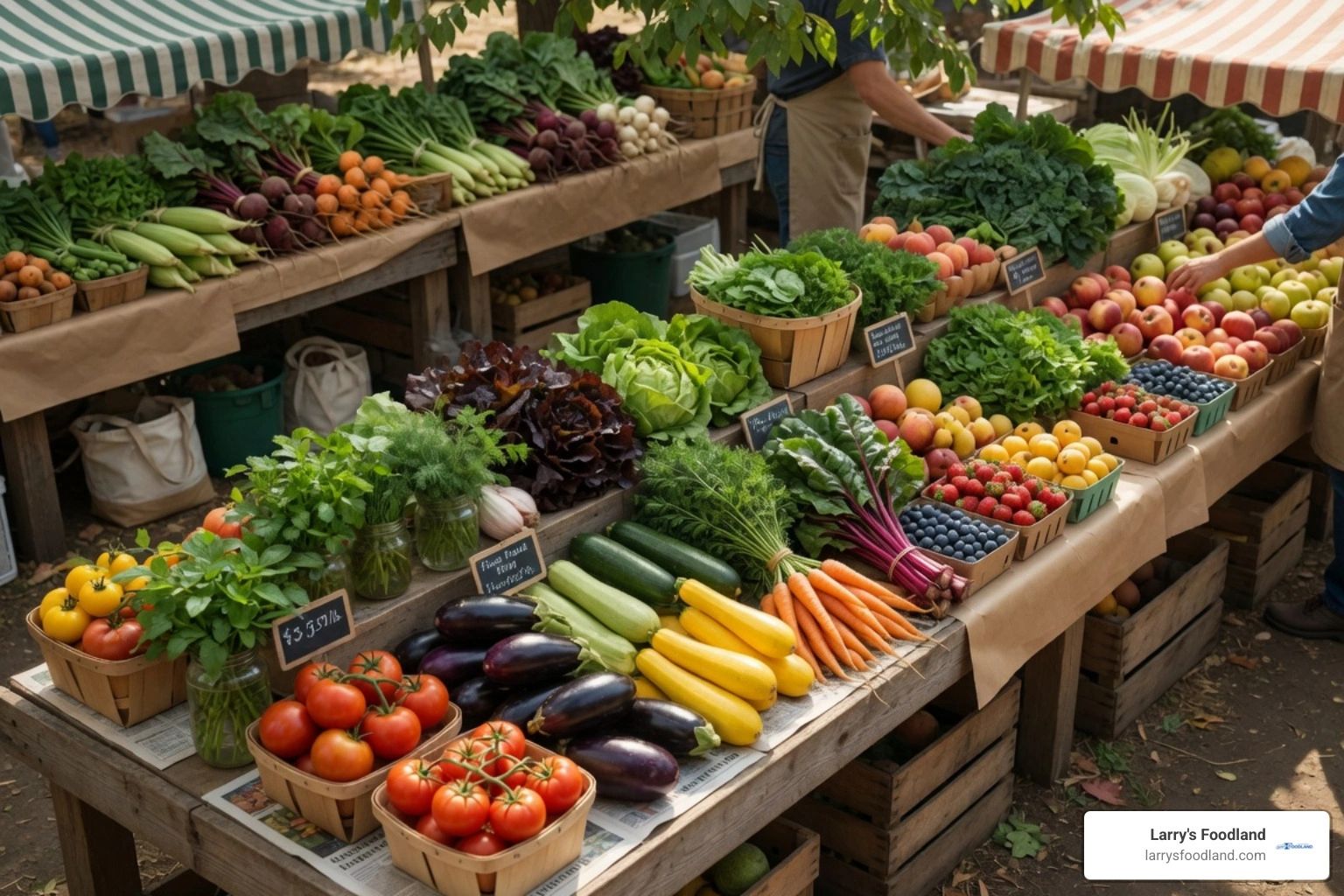
- Farmers markets — direct from growers, seasonal and local
- CSA (Community Supported Agriculture) boxes — weekly farm deliveries to your door
- Farm stands — small-scale, often same-day harvested produce
- Online organic delivery services — convenient but no hands-on quality check
Organic food isn’t a niche trend anymore. U.S. organic produce sales hit $18.1 billion in 2023 — a 4.5% jump from the year before. And organic now makes up 15% of all produce sales in the country, even though it’s just 6% of total food sales overall.
That gap tells you something important: people are willing to pay more for fresh, clean produce.
But knowing organic food is worth it and actually finding a reliable source near you are two different problems. Options have multiplied fast — farm boxes, delivery apps, co-ops, urban farms, supermarkets. It can be hard to know where to start.
This guide cuts through the noise. Whether you have five minutes or fifty, you’ll know exactly where to look, what to ask, and how to get the best quality without overpaying.
The Benefits of Choosing Organic and Locally Grown Food
When you search for fresh organic food near me, you are not just looking for a healthier dinner; you are participating in a massive shift toward sustainable living. Choosing organic, locally grown food offers profound benefits that ripple from your dinner plate all the way down into the earth.

Soil Health and Carbon Sequestration
At the heart of the organic movement is soil health. Conventional farming often relies heavily on synthetic fertilizers and chemical pesticides, which can deplete the soil of its natural microbiome over time. In contrast, organic agriculture focuses on nurturing the earth. By utilizing natural compost, crop rotation, and cover crops, organic farmers build nutrient-dense soil teeming with beneficial microbes.
Healthy soil is also a powerful tool in combating climate change. Well-managed organic soil acts as a carbon sink, pulling carbon dioxide out of the atmosphere and storing it safely underground. To dive deeper into how agricultural practices impact our ecosystems, you can Learn about sustainable soil health.
Nutrient Density and Pesticide Reduction
Because organic plants grow in rich, balanced soil, they often develop robust root systems that absorb vitamins and minerals more efficiently. Many consumers report that organic fruits and vegetables taste noticeably more vibrant and satisfying than their conventional counterparts.
Furthermore, choosing organic significantly reduces your exposure to synthetic pesticide residues. For families—especially those with young children—minimizing daily exposure to agricultural chemicals is a major motivator. When you buy organic, you gain peace of mind knowing your food was grown using natural pest management strategies.
How to Locate the Best Fresh Organic Food Near Me
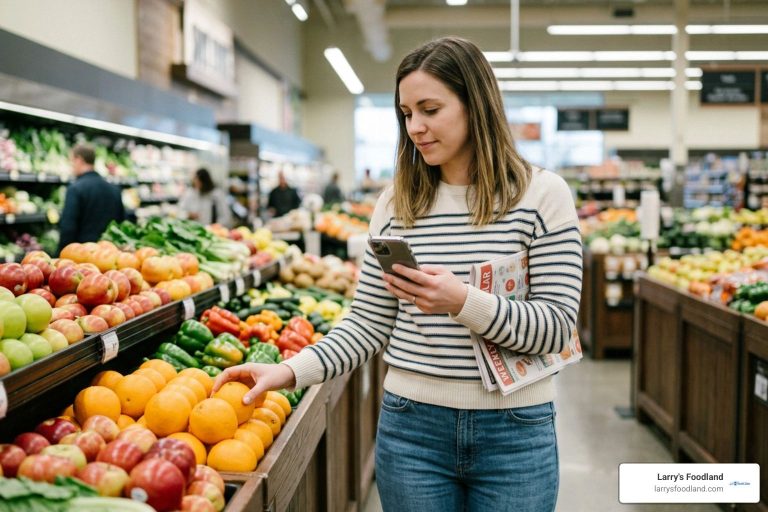
If you live in the Livonia, Michigan area, finding top-tier organic food is incredibly straightforward. You do not have to rely on national corporate giants to get premium, farm-fresh items. There is a rich ecosystem of local supermarkets, specialty markets, and regional farms right in our backyard.
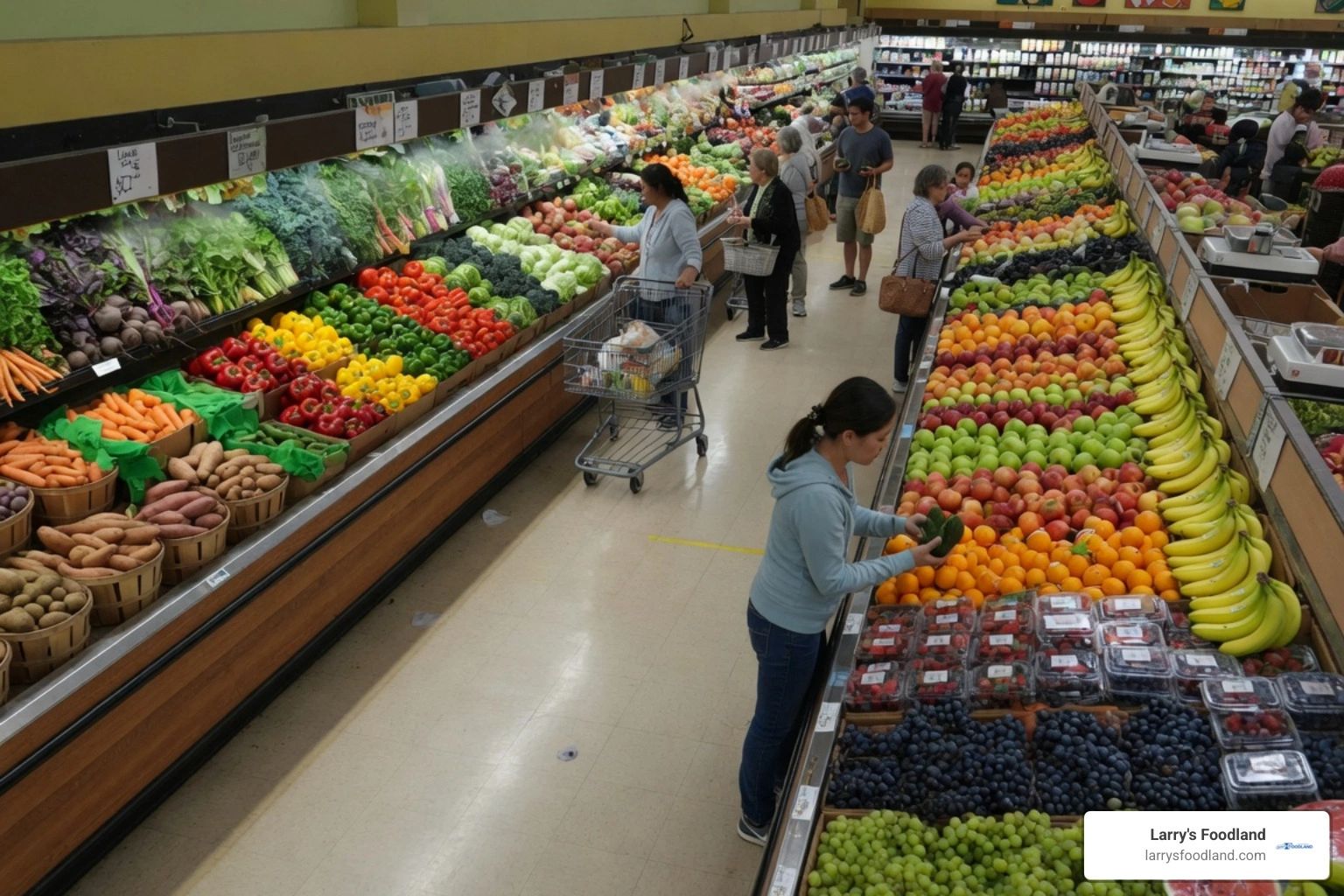
When evaluating where to shop, it helps to understand your local options. In Southeast Michigan, we are lucky to have excellent resources. If you are looking for hand-selected specialty items, gourmet additions, and fresh organic produce, finding a trusted local supermarket is key.
For those who prefer a hybrid approach—combining the ease of online ordering with the authenticity of local sourcing—there are various regional networks that connect you with growers, but nothing beats the hands-on experience of visiting a local market where you can inspect the quality yourself.
To help you decide which shopping method fits your lifestyle, we have broken down the key differences between your primary options:
Sourcing Option Convenience Quality Control Price Range Best For Local Supermarkets (e.g., Larry’s Foodland) Excellent (Open 24/7, immediate pickup) High (You hand-select every piece of produce) Budget-Friendly (No membership fees, great weekly sales) Daily grocery runs, flexible schedules, and budget-conscious organic shoppers Conventional Grocery Stores Good (Standard hours) Medium (Limited organic selection, less frequent stocking) Moderate (Standard pricing) Shoppers who do not mind limited organic variety Mass Retailers / Box Stores Fair (Long checkout lines, bulk sizes only) Medium (Pre-packaged items, cannot inspect individual pieces) Variable (Requires paid membership) Buying organic pantry staples in large bulk quantities
Evaluating Sourcing Practices for Fresh Organic Food Near Me
Not all organic food is created equal. When searching for fresh organic food near me, it is essential to look beyond the basic label and understand how the food was produced.
Modern sustainable agriculture has evolved to include regenerative agriculture. This approach goes beyond simply avoiding synthetic chemicals; it actively restores the land through holistic practices like rotational grazing, minimal tillage, and biodiversity conservation.
To ensure the food you buy meets strict federal guidelines, look for the USDA Organic seal. This certification guarantees that the food was produced without synthetic fertilizers, sewage sludge, irradiation, or genetic engineering. You can Discover organic farming standards to learn exactly what goes into earning this respected seal.
At Larry’s Foodland, we take sourcing seriously. We work hard to bring high-quality items straight to our shelves so you don’t have to spend hours researching farm practices. To see what we currently have in stock, Explore our fresh produce department.
Why Local Supermarkets Beat Online-Only Retailers
While clicking a button on an app and having a box of veggies show up on your porch sounds convenient, online-only organic retailers come with distinct disadvantages:
- No Membership Fees: Many online delivery services require monthly or annual subscriptions just to access their storefronts. At a local supermarket, you walk right in and pay only for the food you buy.
- Firsthand Quality Inspection: When you order online, a stranger selects your produce. If they grab a bruised avocado or a wilted bunch of kale, you are stuck with it. Shopping in person lets you use your senses—smell, touch, and sight—to ensure you are taking home peak-quality items.
- Immediate Availability: If you get a sudden craving for a fresh organic salad at 10:00 PM, an online service cannot help you.
As a 24-hour supermarket, we are proud to offer round-the-clock convenience to the Livonia community. You can shop on your own schedule, whether that is early in the morning before work or late at night. To plan your next trip and maximize your budget, you can always View our weekly sales ad or come in to Explore our fresh produce department.
Evaluating Authenticity and Sustainability in Organic Sourcing
With so many marketing terms thrown around—like “all-natural,” “eco-friendly,” and “pasture-raised”—it is easy to feel overwhelmed. How do you know if the food you are buying is genuinely sustainable?
The most reliable benchmark remains the USDA Organic certification. Unlike unregulated buzzwords, the USDA Organic label is legally protected. Farms must undergo rigorous annual audits to maintain their certified status. To understand the strict criteria farmers must meet, you can Learn about USDA organic standards.
In addition to federal certifications, look for farms practicing agroecological farming, which aligns agricultural production with natural ecosystems. Many local Michigan farms focus on transparent supply chains, allowing you to trace your food directly back to the soil it grew in. Supporting local agriculture keeps your food dollars within the regional economy and reduces the environmental impact of long-distance shipping.
Frequently Asked Questions About Organic Food
Navigating organic agriculture can bring up plenty of questions. Here are some of the most common things shoppers ask us about sourcing and enjoying organic food.
What is the difference between organic and local food?
“Organic” and “local” are two entirely different concepts, though they often overlap.
- Organic refers to how the food was grown. It means the farmer followed strict USDA guidelines, avoiding synthetic pesticides, bioengineering, and chemical fertilizers.
- Local refers to where the food was grown. Typically, local food is harvested within a 100-to-150-mile radius of where it is sold.
A piece of produce can be organic but shipped from thousands of miles away, accumulating significant “food miles” and environmental impact. Conversely, a local farmer might use highly sustainable, pesticide-free methods but choose not to pay for the expensive official organic certification. When possible, choosing food that is both local and organic gives you the best of both worlds. Ready to find the perfect balance? You can Browse our fresh organic selection.
How do seasonal offerings affect organic food availability?
Because organic farming relies on natural cycles rather than chemical interventions, what you find on the shelves changes with the seasons.
In Michigan, our local growing season peaks from late spring through autumn. During these months, you will find an abundance of fresh, locally harvested organic greens, tomatoes, berries, and sweet corn. In the colder winter months, local offerings shift toward hardy root vegetables, squash, and greenhouse-grown specialties.
Embracing seasonal eating means enjoying food when it is naturally at its peak flavor and nutritional value. To see what is fresh and in-season right now, Check out our fresh produce department.
How can I save money when buying organic produce?
It is no secret that organic food can sometimes cost more. Consumers spend an average of 20-30% more on organic groceries compared to conventional items. However, eating clean does not have to break the bank. Here are our favorite insider tips for saving money:
- Shop the Sales: Supermarkets regularly discount organic items when they are in peak supply. Always View our weekly sales ad before you shop to build your meal plan around what is on sale.
- Buy in Bulk: For items you use constantly—like organic oats, grains, or frozen organic berries—buying in larger quantities is often much cheaper per ounce.
- Prioritize the “Dirty Dozen”: If you are on a tight budget, focus your organic spending on produce that typically has the highest pesticide residues when grown conventionally (like strawberries, spinach, and apples). You can safely buy conventional versions of the “Clean Fifteen” (like avocados, sweet corn, and pineapples).
Conclusion
Finding fresh organic food near me does not have to be a complicated treasure hunt. By understanding local sourcing, reading labels carefully, and supporting community-focused markets, you can easily feed your family high-quality, nutrient-dense meals.
At Larry’s Foodland, we are proud to be your trusted partner on this wellness journey. Located right here in Livonia, Michigan, we combine the high quality of a specialty organic market with the unbeatable convenience of a 24-hour supermarket. Whether you are looking for crisp organic greens, custom-cut meats from our full-service butcher, or warm treats from our scratch bakery, we are open around the clock to serve you.
Stop by and see us today! You can Explore our fresh produce department to find tonight’s dinner ingredients, or Visit our home page to learn more about our services and location.