Why Fresh Cut Meats Are Worth Seeking Out
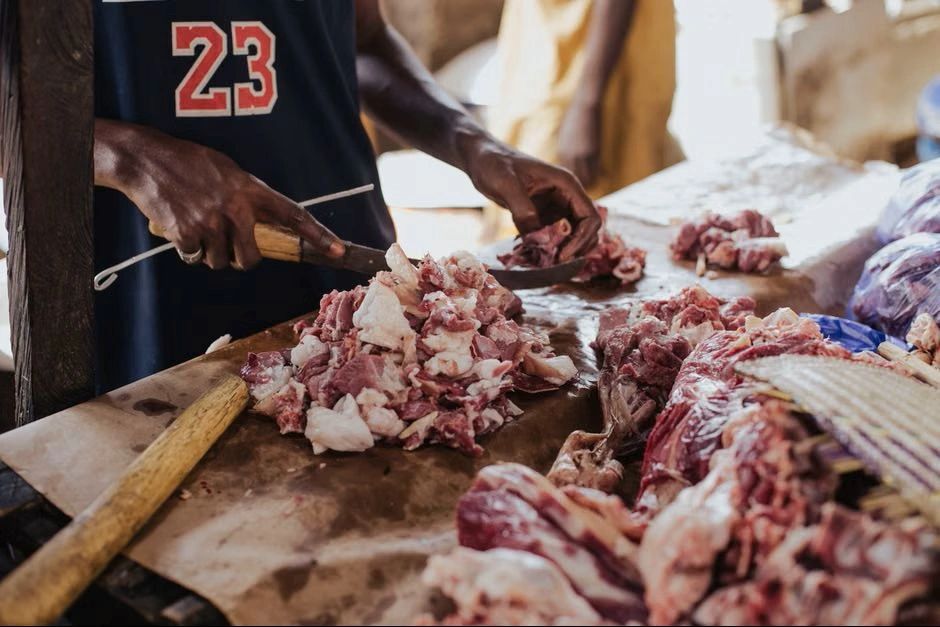
Fresh cut meats are portions of beef, pork, chicken, seafood, and other proteins that are trimmed and cut to order — not pre-packaged days in advance and sealed in plastic.
Here’s a quick breakdown of what sets them apart:
- Flavor: Cut fresh means less oxidation and better taste
- Quality control: You can see the marbling, color, and trim before you buy
- Customization: Ask for the exact thickness, size, or portion you need
- Freshness: No mystery dates — the meat is cut the same day you take it home
- Sourcing: Many fresh-cut counters source from local or regional farms with higher standards
Most people can tell the difference the moment they cook it.
The U.S. fresh meat market was valued at around $85.6 billion in 2023, and it keeps growing. Over 70% of U.S. consumers say they prefer buying fresh-cut meats from an in-store butcher or specialty market over grabbing a pre-wrapped tray off a shelf. That’s not a coincidence — it reflects a real shift toward quality, transparency, and value.
Whether you’re grilling a ribeye on a Friday night or meal-prepping chicken breasts for the week, knowing how to choose the right fresh cut makes a real difference in what ends up on your plate.
This guide walks you through everything — from how to read a cut at the counter, to what questions to ask your butcher, to how to store what you bring home.
Why Choose Fresh Cut Meats Over Pre-Packaged Alternatives
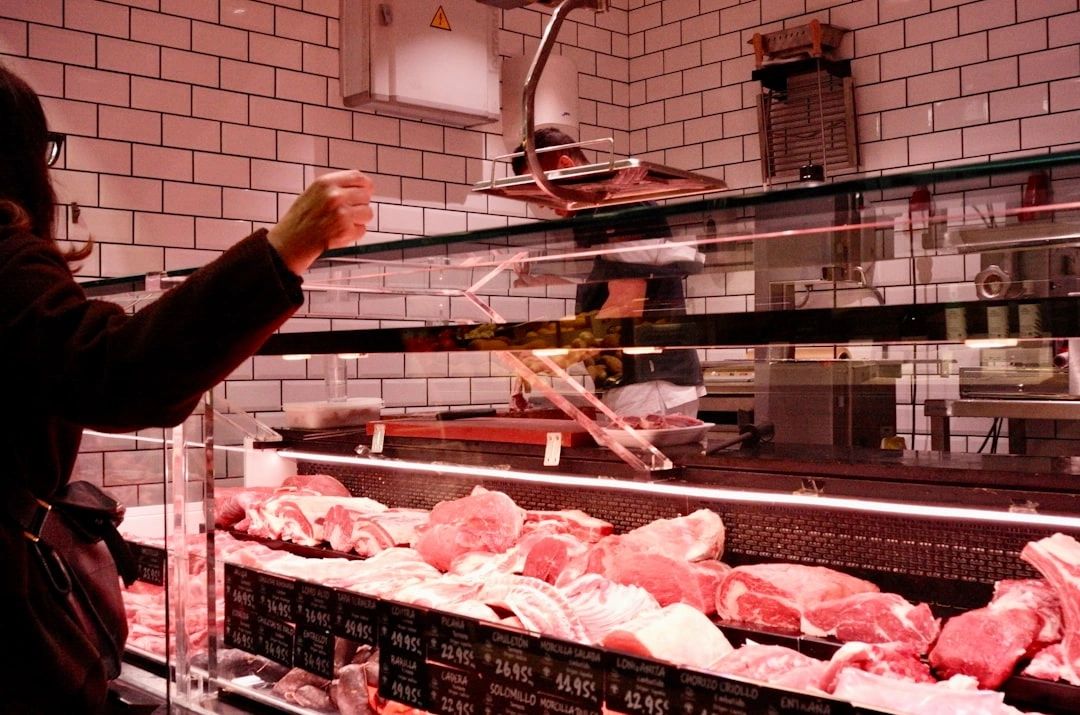
When you walk down the meat aisle of a standard big-box grocery store, you are greeted by rows of uniform styrofoam trays wrapped in tight plastic film. It looks convenient, but there is a hidden cost to this convenience. Pre-packaged meat is often processed at a centralized plant miles away, shrink-wrapped days before it reaches the shelf, and sometimes treated with atmospheric gases to preserve its pink color long after its natural peak freshness has passed.
In contrast, choosing fresh cut meats from a dedicated counter transforms your cooking and dining experience. When meat is sliced fresh, it retains its natural moisture and structural integrity. Pre-packaged meats often sit in their own juices for days, which leads to a soggy texture and a loss of valuable flavor. Furthermore, many packaged meats are injected with sodium and saline solutions to extend their shelf life and artificially increase their weight, meaning you end up paying for water instead of high-quality protein.
By stepping up to the fresh meat counter, you gain access to superior marbling, better tenderness, and robust, natural flavor. You also get to inspect the exact piece of meat you are purchasing, ensuring you do not end up with a steak that looks great on top but is hiding a thick vein of gristle underneath.
To help you visualize the differences, we have broken down how fresh-cut options compare to their pre-packaged counterparts:
Feature Fresh Cut Meats Pre-Packaged Supermarket Meats Days Since Cutting Cut daily on-site Cut days (or weeks) ago at a central facility Sourcing Transparency Traceable to specific regions or local farms Often blended from multiple sources Additives & Preservatives None; 100% natural juices Often injected with saline, water, or gases Customization Thickness, trim, and weight cut to your exact preference Fixed weights and pre-determined thicknesses Moisture & Texture Firm, dry surface that sears beautifully Wet, soft texture due to sitting in purge juices Environmental Impact Minimal butcher paper wrapping Styrofoam trays and heavy plastic films
Sourcing and Quality of Fresh Cut Meats
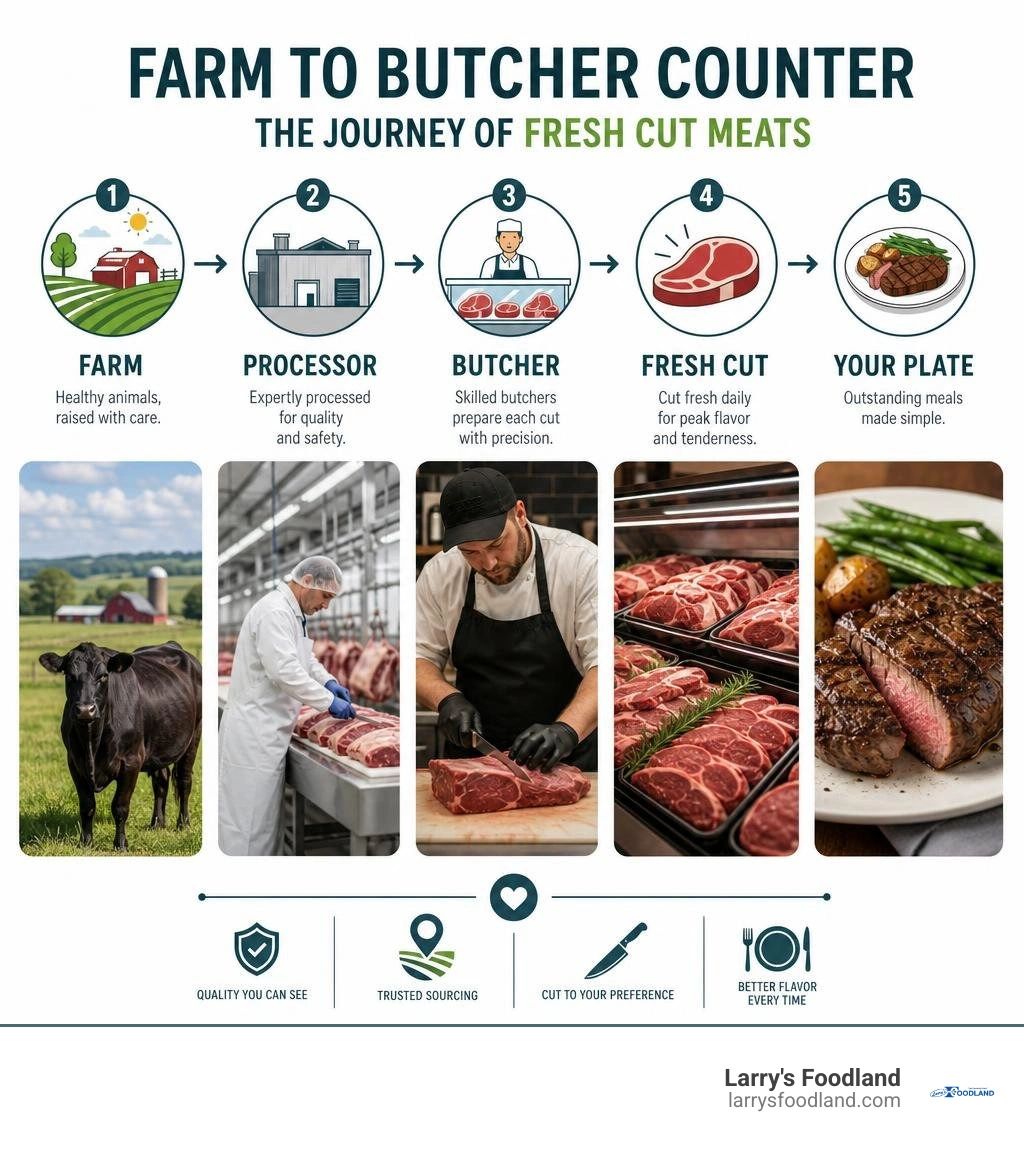
The journey of a great meal begins long before the meat hits our hot skillet. It starts with where the livestock was raised and how it was handled. Specialty butcher shops and fresh meat markets account for nearly 18% of total fresh meat sales in the U.S., and this segment is growing rapidly. Consumers are increasingly demanding premium, responsibly sourced products, and we see this trend reflected right here in our Michigan communities.
When we source meat for our Larry’s Foodland Butcher Shop, we prioritize regional quality and traditional standards. Sourcing from regional processors who utilize high-quality Midwestern livestock ensures that the meat does not travel thousands of miles before reaching your plate. This localized focus keeps our food supply chain short, supports regional agricultural economies, and guarantees that the meat on our counter is as fresh as physically possible.
At the fresh counter, you will often find premium classifications like USDA Choice and USDA Prime. These grades are determined by the United States Department of Agriculture based on the maturity of the animal and the amount of intramuscular fat (marbling) within the meat. Additionally, specialty options like grass-fed beef and free-range chicken have seen a 25% increase in sales year-over-year. Consumers love grass-fed beef for its rich, earthy flavor profile and its higher concentration of essential nutrients, including Omega-3 fatty acids and Vitamin B12. Meanwhile, free-range chicken offers superior muscle tone, resulting in tender, juicy poultry that actually tastes like chicken should.
Keeping your sourcing local ensures you get the freshest possible cuts for your family.
The Carnivore’s Counter: Types and Premium Cuts
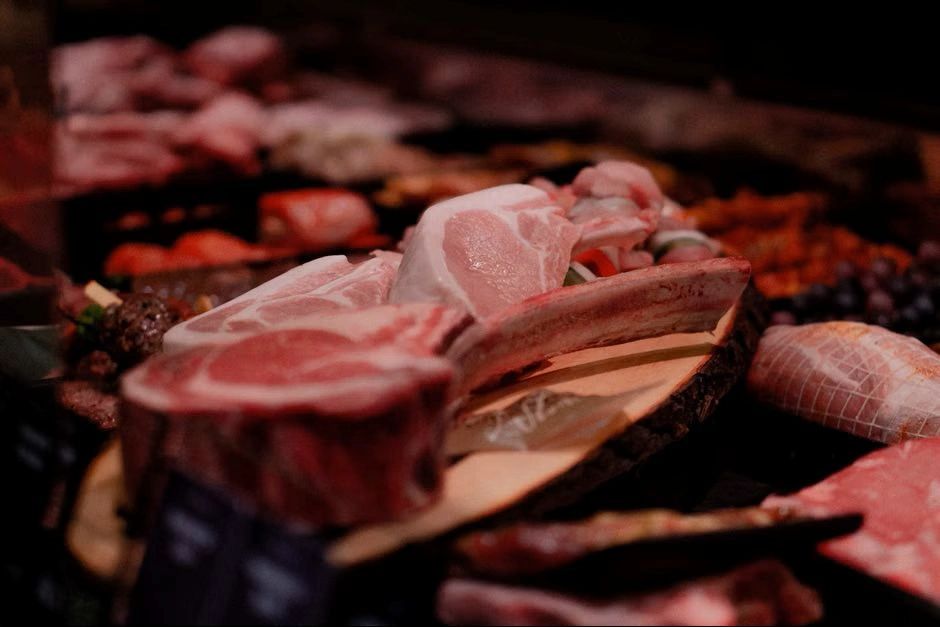
Stepping up to a full-service meat counter can be an exhilarating experience for any meat lover. The glass case displays an array of vibrant colors, textures, and shapes. To get the most out of your visit, it helps to understand the primary categories of meat available and what makes certain premium cuts stand out.
- Beef: This is the star of the show for many carnivores. Premium beef cuts are defined by their tenderness, marbling, and depth of flavor.
- Filet Mignon: Cut from the tenderloin, this is the most tender muscle on the animal. It has a mild flavor and a buttery, melt-in-your-mouth texture.
- Ribeye: Highly prized for its rich marbling. The pockets of fat melt during cooking, keeping the steak incredibly juicy and packed with robust flavor.
- Porterhouse: The best of both worlds, combining a tender filet mignon and a flavorful strip steak separated by a T-shaped bone.
- Hanger Steak: Often referred to as the “poor man’s tenderloin,” this prized cut is exceptionally flavorful and tender when sliced against the grain.
- Pork: Far from the dry, tasteless chops of the past, fresh-cut pork is succulent and rich. Look for thick-cut pork chops (either bone-in for moisture or boneless for quick cooking) and pork shoulder (perfect for slow-cooking and pulling).
- Poultry: Fresh-cut chicken breast and thighs should be plump and hand-trimmed. Free-range chicken yields a superior texture because the birds are allowed to exercise, developing healthy muscle fibers that hold onto juices during roasting or grilling.
- Seafood: From fresh salmon delivered daily to delicate shellfish, a great counter provides sustainably sourced seafood that smells cleanly of the ocean, never fishy.
We believe that premium meat should be accessible alongside all your daily grocery needs. You can explore our extensive, hand-selected varieties directly at our Larry’s Foodland Meat Selection.
Selecting the Best Fresh Cut Meats at the Counter
How do you know you are getting the absolute best piece of meat in the case? You do not need a culinary degree to spot top-tier quality; you just need to know what to look for:
- Color: For beef, look for a bright cherry-red hue. Avoid beef that looks dull, grey, or brown at the edges (which indicates oxidation). Pork should be a delicate, light pink with white fat. Chicken should be creamy white or pale pink, with no yellowing or dry, paper-like skin.
- Marbling: Look for thin, white flecks of fat distributed evenly throughout the muscle of the meat, especially in steaks like ribeyes and strip loins. This is intramuscular fat, and it is the single most important contributor to tenderness and flavor. Avoid steaks with large, coarse chunks of gristle running through the middle.
- The Fat Cap: On cuts like New York strips or pork loins, look for a solid, clean white layer of fat on the outer edge. This fat cap bastes the meat as it cooks, keeping it moist.
- Texture: The meat should look firm and dense, not wet, soft, or mushy. It should hold its shape well behind the glass.
- Expert Butcher Advice: Never hesitate to talk to the person behind the counter. Ask them which cuts were prepared that morning, or what they recommend for your specific cooking method. A great butcher loves sharing their knowledge.
The Value of Full-Service Butcher Shop Services
One of the greatest advantages of bypassing the pre-packaged aisle is the access to personalized, expert butcher services. A real butcher shop is not just a place to buy food; it is a culinary resource.
When you visit our Butcher Shop, you are not limited to what is already sitting in the display case. Our professional butchers provide a range of custom services free of charge:
- Custom Cutting: Want a ribeye cut to an exact two-inch thickness for a reverse-sear? Need your pork chops stuffed or pocketed? We can do that on the spot.
- Precision Trimming & Tying: We can trim excess fat to your specifications, French the bones on a rack of lamb for an elegant presentation, or roll and tie a beef roast so it cooks perfectly evenly.
- Custom Grinding: Our ground beef is made fresh daily from whole muscle meat, never from pre-ground tubes or mystery trimmings. If you want a custom blend — such as grinding chuck and brisket together for the ultimate backyard burger — we can grind it fresh for you right then and there.
- Wholesale & Bulk Ordering: If you are looking to stock your freezer, you can purchase whole primals (like a whole beef tenderloin or a whole strip loin) at a wholesale price, and our butchers will slice and wrap it into individual steaks for you at no extra cost.
We pride ourselves on bringing old-school artisan dedication directly to our neighbors right here in Livonia, twenty-four hours a day.
How to Order and Prepare Your Premium Cuts
When you step up to the counter, ordering is simple. State the cut you want, how many pieces or pounds you need, and any specific preparation preferences (e.g., “I’d like two bone-in ribeyes, cut one-and-a-half inches thick, please”).
Once you have your premium meat home, matching the cut to the correct cooking method is the key to culinary success:
- Grilling: Ideal for highly marbled, tender steaks like ribeyes, T-bones, and strip steaks, as well as pork chops and burgers. Cook over high, direct heat to develop a beautiful crust, then move to indirect heat to finish cooking.
- Pan-Searing: Perfect for smaller, tender cuts like filet mignon or chicken breasts. Use a heavy cast-iron skillet, get it smoking hot with a high-smoke-point oil, and baste the meat with butter, garlic, and fresh herbs during the last few minutes of cooking.
- Roasting: Best for larger cuts like prime rib, whole chickens, or pork loins. Use a lower oven temperature to cook the meat gently and evenly throughout.
- Air Frying: A quick, modern method that works wonderfully for hand-trimmed chicken breasts, pork chops, or house-made sausages, giving them a crispy exterior while locking in the juices.
For more cooking inspiration and to plan your next meal, you can browse our full selection of fresh offerings at Larry’s Foodland.
How to Store and Cook Your Fresh Cut Meats
To preserve the quality of your fresh meat and ensure your family’s safety, proper storage and cooking guidelines must be followed:
- Refrigeration: Store your fresh meat in the coldest part of your refrigerator (usually the back of the bottom shelf) at 40°F or below. Keep the meat in its original butcher paper wrapping if you plan to cook it within 1 to 2 days for poultry and ground meats, or 3 to 5 days for steaks, roasts, and pork chops.
- Freezing: If you cannot cook the meat within those timeframes, freeze it immediately. To prevent freezer burn, wrap the meat tightly in plastic wrap or freezer paper, and then place it inside a heavy-duty freezer bag, squeezing out as much air as possible. Properly frozen meat maintains peak quality for 4 to 12 months.
- Food Safety: Always wash your hands, utensils, and cutting boards with hot, soapy water after they touch raw meat. Never wash raw meat in the sink, as this can splash bacteria onto your kitchen counters.
- Using a Meat Thermometer: Color is not a reliable indicator of doneness. Always use a digital meat thermometer inserted into the thickest part of the meat:
- Beef, Pork, Lamb (Steaks & Roasts): 145°F followed by a mandatory 3-minute rest period.
- Ground Meats: 160°F.
- Poultry (Chicken & Turkey): 165°F.
Frequently Asked Questions About Fresh Meat
What is the difference between grass-fed and grain-finished beef?
Grass-fed beef comes from cattle that have grazed on pasture grass for their entire lives. It is typically leaner, has a more robust and earthy flavor, and boasts higher levels of Omega-3 fatty acids and Vitamin B12. Grain-finished beef comes from cattle that start on pasture but spend their final months eating a balanced grain diet. This grain finishing increases the marbling, resulting in a sweeter, buttery flavor profile and a highly tender texture.
Is buying from a local butcher more expensive than a supermarket?
While the price per pound at a full-service counter can sometimes look slightly higher than pre-packaged grocery store meat, the overall value is often much better. Because our butchers hand-trim excess fat and gristle before weighing your meat, you only pay for the actual, edible portion of the cut. Furthermore, you can buy the exact amount you need rather than being forced to buy oversized pre-packaged family packs, reducing food waste and making your shopping highly cost-effective.
How long can fresh cut meat stay in the refrigerator?
As a general rule of thumb for food safety, raw poultry, ground meats, and fresh seafood should be cooked or frozen within 1 to 2 days of purchase. Whole muscle cuts of beef and pork, such as steaks, chops, and roasts, will keep safely in the refrigerator for 3 to 5 days.
Conclusion
Finding the best fresh cut meats does not have to be a complicated chore. By stepping up to a full-service counter, looking for vibrant color and beautiful marbling, and utilizing the skills of an expert butcher, you can elevate every meal you cook.
At Larry’s Foodland, we are proud to offer our Livonia community the ultimate combination of premium, custom-cut meats and round-the-clock convenience. Our full-service butcher department is always ready to prepare the exact cut you need, whenever inspiration strikes.
To find us or plan your next visit, check out Larry’s Foodland in Livonia, MI or explore our current specials online at Visit Larry’s Foodland. Stop by our counter today and taste the difference that truly fresh, expertly cut meat makes!