Find Discount Food Stores Near Me Without Sacrificing Quality
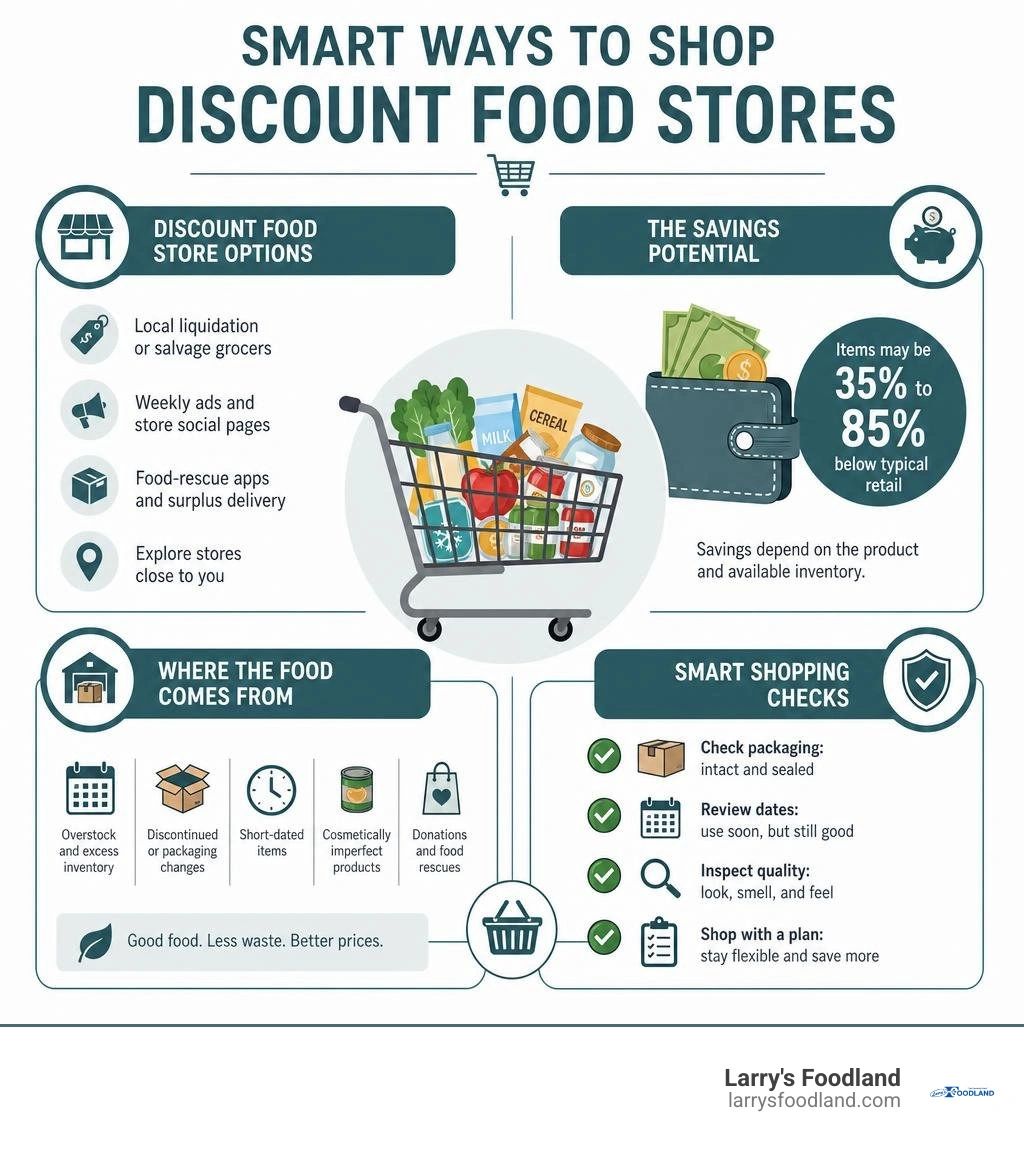
Discount food stores near me can be a smart place to find lower-priced pantry staples, frozen foods, dairy, produce, and more. These stores often sell surplus, closeout, discontinued, short-dated, or cosmetically imperfect products for far less than standard grocery prices.
What to look for Why it helps Local liquidation or salvage grocers Often carry name brands at deep discounts Weekly ads and store social pages Helps you spot limited-time deals Intact packaging and sensible dates Protects quality and food safety Food-rescue apps and surplus delivery Adds more local and online options
Savings can be substantial: discount grocers may price items 35% to 85% below typical retail, depending on the product and inventory. The tradeoff is that selection changes quickly, so a flexible shopping list goes a long way.
This guide breaks down where these stores get their food, what “salvage” really means, how to shop safely, and how to find worthwhile deals close to home.
What Are Discount Food Stores and How Do They Work?
When searching for discount food stores near me, it helps to understand what makes these stores distinct from traditional corporate supermarkets. Standard grocery chains operate on predictable, highly structured distribution models. They stock consistent brand lineups week after week and automatically cycle out inventory when seasonal packaging updates arrive or when items reach specific display windows.
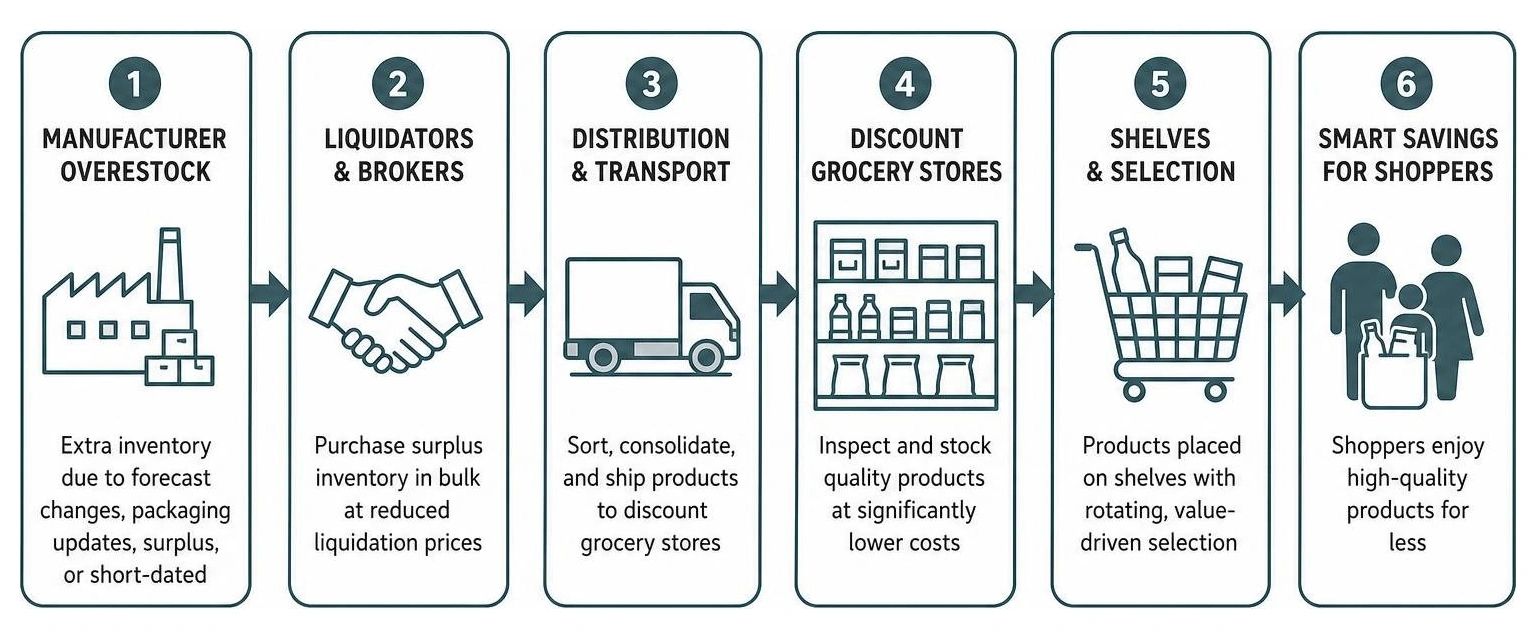
Discount food stores, on the other hand, operate on opportunistic inventory acquisition. They buy high-quality products that standard stores cannot or will not carry due to logistics, space limits, or branding shifts. By acquiring these inventory items at heavily reduced liquidation rates, discount grocers pass those massive price cuts directly on to local shoppers.
Whether you are looking for household essentials, baking ingredients, canned vegetables, or snacks, discount outlets give families a practical way to stretch their weekly spending money without compromising on everyday meal quality.
Understanding Salvage Sourcing and Date Codes
To understand how discount food stores offer prices that are up to 75% or 80% below standard retail, you have to look at supply chain surplus. Everyday causes for discounted grocery stock include:
- Manufacturer Overstock: A food manufacturer produces 100,000 cases of cereal for a national promotion, but retailers only buy 70,000. The remaining 30,000 cases need to move out of the warehouse quickly to free up space.
- Discontinued Items & Package Redesigns: When a manufacturer changes its logo, tweaks a recipe, or introduces seasonal box graphics (like holiday-themed baking mixes), retailers liquidate the older packaging. The food inside remains fresh and completely untouched.
- Truck Salvage & Damaged Case Goods: During transit, a single outer cardboard case in a shipping pallet might get crushed or scraped. Major supermarkets will often reject the entire shipping pallet for aesthetic reasons, even if 95% of the individual items inside are in perfect condition.
- Short-Coded Products: Items approaching their designated best-by window are transferred to liquidation networks so consumers can consume them immediately rather than letting them sit on warehouse shelves.
Understanding date codes is essential when shopping these deals. A “Best If Used By” or “Best Before” date is a manufacturer’s recommendation for maximum flavor and crispness—it is not an official expiration date or safety deadline.
Environmental Benefits: Saving Food and Reducing Waste
Shopping at discount food stores does more than protect your wallet; it plays a vital role in environmental protection. Tonnes of perfectly wholesome, perfectly safe food are discarded into landfills every year simply because of minor cosmetic flaws, overproduction, or arbitrary date codes.
When good food ends up in landfills, the resources used to produce it—water, land, agricultural labor, fuel, and processing energy—are wasted. As organic material decomposes in landfills without oxygen, it releases methane, a potent greenhouse gas.
By purchasing overstock, short-coded, and cosmetically imperfect foods, you actively participate in food rescue. Every cartful of rescued groceries helps lower greenhouse emissions, cuts down on food waste, and creates a more sustainable food ecosystem in our communities.
Types of Stores and Options for Finding Discount Food Stores Near Me
Finding reliable discount grocery options in your local area usually comes down to knowing where to look and understanding the different formats available.
Physical Liquidation Outlets and Regional Grocers
Physical brick-and-mortar stores remain the go-to choice for hands-on deal hunters. These stores range from independently owned neighborhood markets and salvage liquidators to full-service regional grocery stores that prioritize aggressive weekly value pricing.
Physical stores allow you to hand-inspect items, explore full-service deli counters, check fresh meat cuts, and grab daily essentials right when you need them. To make the most of physical grocery trips, pay close attention to promotional schedules and store circulars. Exploring resources like Stop Overpaying With These Supermarket Sales Near Me can help you quickly locate the best local deals and maximize your daily savings.
Finding Online Discount Food Stores Near Me
If you prefer digital convenience or live farther away from physical salvage outlets, online discount food providers offer a great alternative. Modern surplus food delivery options include:
- Direct-to-Door Surplus Delivery Services: Specialized web services partner directly with food producers to package surplus shelf-stable goods, organic pantry items, and imperfect produce into home-delivered shipments at discounts of up to 40% off standard retail.
- Food Rescue Mobile Apps: Surplus food apps partner with regional grocery stores, bakeries, and local restaurants. Users purchase “mystery bags” or short-dated surplus items at a fraction of their retail price, picking them up directly at local store counters.
- Digital Circulars and Local Delivery: Many local neighborhood markets now maintain updated digital storefronts or email newsletters, letting you lock in deep discounts on weekly sales items before stepping foot out the door.
What You Can Buy and How Much You Can Save
Discount grocery outlets feature an impressively wide spectrum of daily items. While inventory naturally shifts based on surplus availability, you will consistently find major price markdowns across key department categories:
Department Common Items Found Typical Discount Range Dry Goods & Pantry Pasta, canned soups, beans, rice, boxed cereal, spices 40% to 80% off retail Snacks & Beverages Chips, crackers, coffee, sparkling water, fruit juices 35% to 75% off retail Baking Supplies Flour, sugar, baking mixes, chocolate chips, oils 30% to 60% off retail Frozen Foods Ice cream, frozen vegetables, meals, pizza 35% to 70% off retail Refrigerated & Dairy Butter, cheese blocks, yogurt, sour cream 25% to 50% off retail Fresh Meat & Deli Custom butcher cuts, sliced lunch meats, specialty cheeses 20% to 50% off retail
Smart Product Choices: What to Buy at Discount Food Stores Near Me
To stretch your dollars as far as possible, prioritize high-value categories where discount grocers offer the deepest price cuts:
- Baking Goods & Bulk Ingredients: Flour, sugar, rolled oats, spices, and olive oil have long shelf lives and rarely decline in quality, making them perfect items to buy discounted in bulk.
- Canned & Dry Staples: Canned tomatoes, black beans, whole-grain pastas, and hearty rice mixes are practically indestructible when stored in a cool, dry pantry.
- Fresh Meat & Deli Cuts: Look for butcher specials, short-dated fresh cut meats, and deli cheeses. Freezing meats immediately after purchase lets you lock in lower prices while preserving quality for future meals. Check out our latest Weekly Sales Ad to see what fresh cut meats and deli specials are featured this week!
Calculating Your Potential Household Savings
How much money can you actually keep in your wallet by making discount food stores part of your regular routine?
Statistics show that salvage grocers and liquidation sellers can offer overall savings ranging from 35% to as high as 85% off typical supermarket prices. For an average family spending $800 to $1,000 per month on standard groceries, shifting even half of their routine purchases to discount sources or featured sales circulars can save anywhere from $150 to $400 every single month. That translates to thousands of dollars in household savings every year.
Safety First: What to Inspect Before You Buy
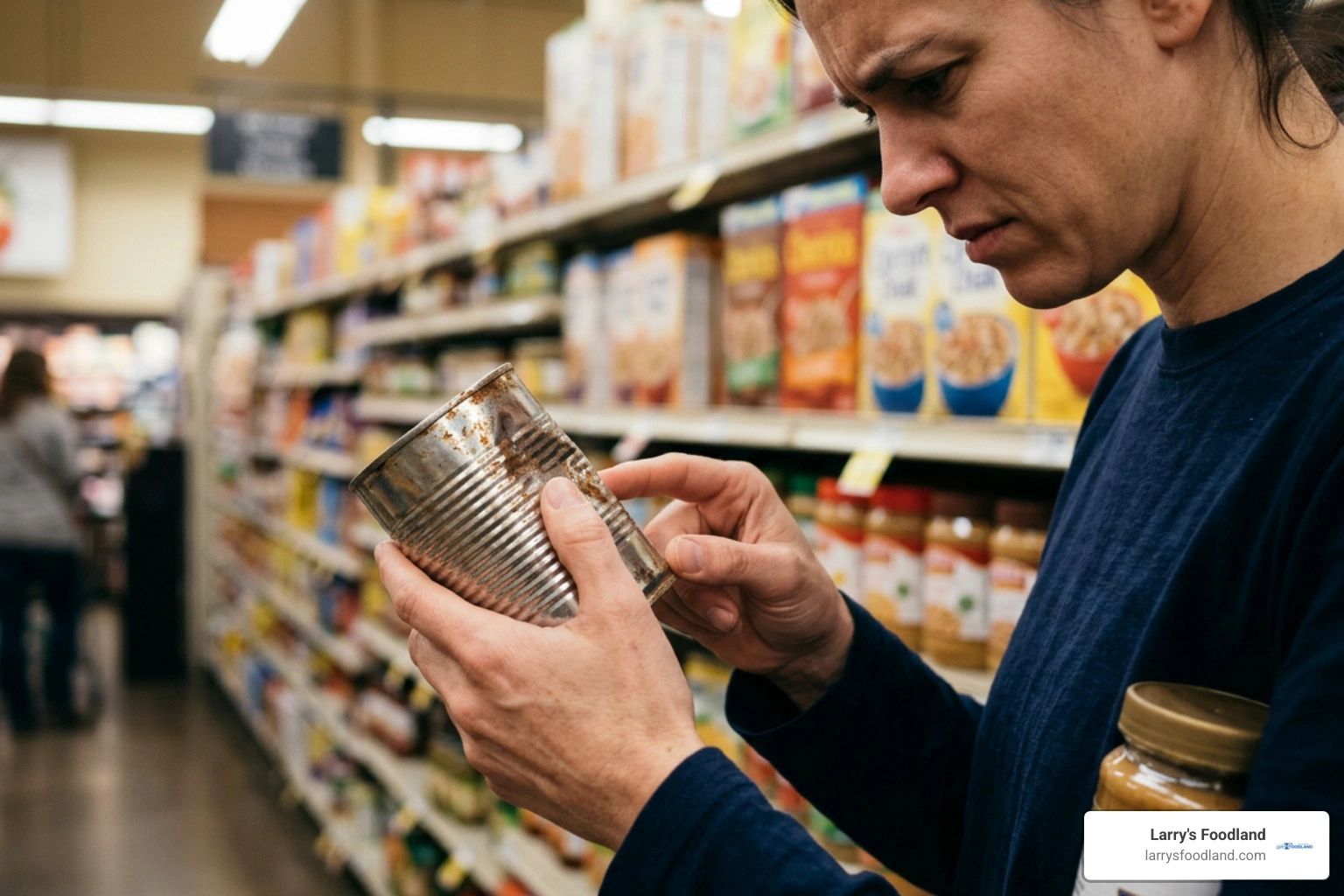
While shopping at discount food stores is a brilliant way to save money, consumer food safety should always come first. Knowing how to inspect packaging ensures that every item you bring home is wholesome, delicious, and completely safe for your family.
Red Flags and Packaging Integrity Risks
When evaluating discounted or salvage merchandise, keep an eye out for these clear warning signs:
- Deep Canned Goods Dents: Minor cosmetic dings on a can’s outer wall are harmless. However, steer clear of deep dents that form sharp creases, dents located directly along top or bottom side seams, or any can that prevents proper opening.
- Swollen or Bloated Packaging: Never purchase cans, jars, or flexible pouch foods that appear swollen, bulged, or pressurized. This indicates potential bacterial growth or gas build-up.
- Broken Tamper-Evident Seals: Check glass jars, plastic tubs, and bottle caps carefully. If a safety button on a jar cap is popped up, or if a plastic inner seal is peeled back or compromised, leave the item on the shelf.
- Rusted Packaging: Surface rust that rubs off with a finger is fine, but heavy rust that creates deep pitting on metal surfaces can create microscopic pinholes, exposing inner contents to air and bacteria.
USDA Guidelines on Expiration vs Best-By Dates
To shop with confidence, it helps to understand the exact definitions established by the USDA Food Safety and Inspection Service regarding date codes on commercial food packaging:
- “Best If Used By / Before”: This date informs consumers when the product will reach its peak flavor, crispness, or optimal quality. It is not a safety date. Foods consumed past this date are generally safe if packaging remains intact.
- “Sell-By”: This date is an internal inventory management guide for store employees, indicating how long the store should display the product on retail shelves.
- “Use-By”: This date represents the last recommended date for using the product while at peak quality. (The only federal requirement for safety expiration dates applies specifically to infant formula).
When you inspect packages for seal integrity and use common sense, short-dated and closeout groceries offer incredible value with minimal risk.
Pro Tips for First-Time Discount Grocery Shoppers
Navigating discount food stores for the first time can feel different from visiting a traditional supermarket chain. Inventory turns over quickly, seasonal items arrive unexpectedly, and popular brand deals sell fast. Use these proven strategies to get the absolute most out of every shopping trip.
Strategy 1: Shop Discount Outlets First
The single most effective budget strategy is to shop discount outlets first before filling in remaining items at your regular grocery market.
Start your weekly shopping run by visiting your preferred discount food grocer or checking early weekly circulars. Take inventory of available proteins, produce, baking essentials, and pantry staples. Build your weekly menu around the discounted items you find first, then head to your primary supermarket to pick up any remaining specialized ingredients. Reviewing updates like Stop Overpaying With These Top Weekly Grocery Flyers makes planning your multi-store budget quick and effortless.
Strategy 2: Check Weekly Circulars and Store Schedules
Discount food grocers often follow specific delivery schedules, restock days, and promotional cycles.
- Find Restock Days: Ask store associates what days their new freight deliveries arrive. Arriving shortly after shipment stocking gives you first pick of premium meat cuts, limited-run snacks, and fresh produce.
- Follow Store Social Pages and Email Alerts: Many local markets post daily inventory drops, seasonal closeouts, or weekend butcher specials directly on social media or through weekly email updates.
- Maintain List Flexibility: Go into the store with a general list of food categories (e.g., “ground meat,” “cereal,” “pasta sauce”) rather than strict, fixed brand choices. Flexibility allows you to snap up whichever high-quality brand is currently marked down the most.
Frequently Asked Questions About Discount Grocery Shopping
Are products from discount food stores safe to eat?
Yes, products sold at discount food stores are safe to eat when proper quality checks are followed. Discount grocers adhere to food handling regulations, and the majority of inventory consists of overstock, seasonal box redesigns, closeouts, and short-dated products. By inspecting packaging seals and following standard kitchen storage safety practices, you can enjoy safe, high-quality food while keeping your budget intact.
How much money can I realistically save each month?
Most shoppers save anywhere between 30% and 75% on individual items compared to standard supermarket prices. For an average family budget, incorporating discount stores and promotional circular sales typically yields monthly savings between $150 and $400.
What does ‘salvage’ mean in discount food stores?
In the retail grocery industry, ‘salvage’ refers to surplus products diverted from traditional corporate supply chains. This includes manufacturer overstock, items with minor outer box dents, discontinued product packaging, seasonal overruns, and goods near their optimal best-by date. Rather than discarding these items, salvage grocers purchase them at lower rates and sell them to consumers at deep discounts.
Conclusion: Save Big on Your Next Grocery Run
Finding the best discount food stores near me is one of the practical ways to take control of your household food budget. By combining physical liquidation shopping, checking weekly store flyers, understanding USDA date codes, and remaining flexible with your weekly menu planning, you can cut your grocery spending without giving up standard food quality or family favorites.
At Larry’s Foodland, we believe you shouldn’t have to choose between affordability, fresh produce, custom-cut meats, baked goods, and round-the-clock convenience. Whether you are stocking up your pantry or hunting for this week’s top sales specials, we are here to serve our community 24 hours a day.
Ready to start saving on your everyday grocery essentials? Visit Larry’s Foodland for quality groceries and daily convenience and discover our full-service butcher, fresh bakery, and unbeatable neighborhood value today!